




Most commercial hard ice cream machines in the 1 to 8 kW class run on 220-240 V single phase and need one dedicated circuit per freezing circuit. That is the short answer. The longer answer decides whether your machine runs for ten years or trips a breaker every July afternoon.
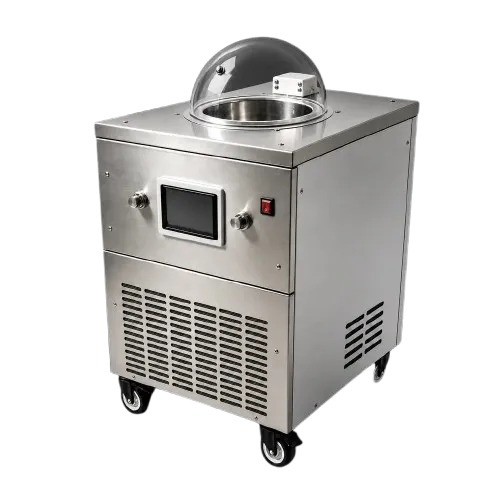
This guide covers the electrical side of a hard ice cream machine: voltage, current draw, breaker and cable sizing, single phase versus three phase, generator backup, and the checks an electrician should confirm before the machine is unpacked. The numbers below come from the GLACIO GB series specifications, and the same method works for any batch freezer.
Quick answer: what power does a commercial ice cream machine need?
A commercial hard ice cream machine draws between roughly 1.5 kW and 8 kW depending on bowl count. Machines up to about 3 kW generally run on a single-phase 220-240 V supply. Larger multi-bowl machines often split the load across two or three independent circuits, or move to three-phase power in markets where it is available.
Plan the circuit at 125% of the rated current, which is the standard continuous-load rule in most electrical codes. A 2.5 kW machine at 220 V draws about 11.4 A, so it needs a 16 A circuit, not a shared 10 A socket.
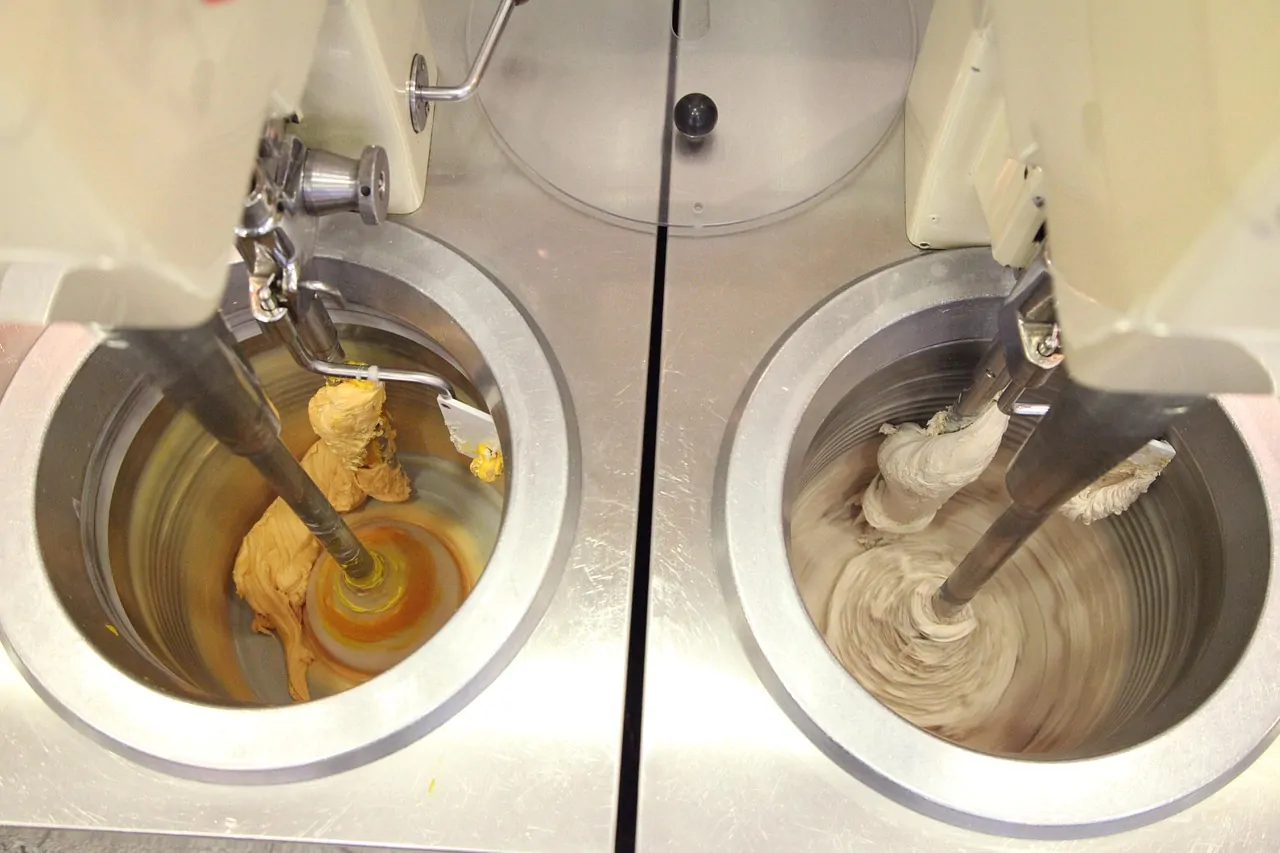
Power draw by machine size
The table below shows the GLACIO GB series, but the pattern applies to any batch freezer: output roughly scales with power, and larger machines split the load across circuits instead of pulling everything through one cable.
| Model | Bowls | Output | Total power | Circuits | Current per circuit at 220 V | Breaker per circuit |
|---|---|---|---|---|---|---|
| GB-1 | 1 x 6 L | 14 L/h | 1.6 kW | 1 | 7.3 A | 16 A |
| GB-2 | 2 x 6 L | 28 L/h | 2.5 kW | 1 | 11.4 A | 16 A |
| GB-4 | 4 x 6 L | 56 L/h | 4.8 kW | 2 | 10.9 A per circuit | 16 A per circuit |
| GB-6 | 6 x 6 L | 84 L/h | 7.2 kW | 3 | 10.9 A per circuit | 16 A per circuit |
Why circuits are split: two independent circuits let one freezing bowl keep running if the other trips, and they keep cable and breaker sizes reasonable. It also means a four-bowl machine does not require a single 32 A cable running across your shop.
Single phase or three phase?
Three-phase power is more efficient for motors and is common in commercial kitchens, but it is not required for machines in this class. What matters is what your building already has and what the machine is ordered with.
- Single phase 220-240 V: the standard for one- and two-bowl machines and for most small shops. Simple to install, works with a standard panel.
- Three phase 380-415 V: useful for large multi-bowl builds and for shops that already run three-phase kitchens. It reduces current per phase and cable thickness.
- 110-120 V markets: small countertop units exist, but commercial batch freezers in this class are not designed for 110 V. A step-up transformer is not a workaround for a 2.5 kW compressor.
Ordering the wrong voltage is the single most expensive mistake in this category. Confirm the machine nameplate against your supply before the order is placed, not after the container arrives.
Breaker, cable, and protection
Four items belong in the electrical plan:
- Dedicated circuit: one circuit per freezing system, not shared with ovens, fryers, or air conditioning.
- Breaker type: a motor-rated breaker (C curve or equivalent) tolerates compressor start-up current without nuisance tripping.
- Earth leakage protection: required by most codes for kitchen equipment. Use a type rated for equipment with electronics and motors, and place it so one trip does not shut down the whole shop.
- Cable size and run length: voltage drop matters on long runs. A machine at the back of a 25 m cable run behaves differently from one beside the panel.
Scenario: a cafe installed a two-bowl machine on a shared 16 A circuit that also fed a panini grill. Individually each load was fine. Together they tripped the breaker during the after-dinner rush, which is exactly when the freezer cabinet temperature climbs fastest. The fix was a dedicated circuit and a 2-hour electrician visit, not a new machine.
Start-up current and generators
Compressors draw a surge of current for a fraction of a second when they start. This is why generator sizing is not simply the machine’s rated kW.
A practical rule for backup power: size the generator at 1.5 to 2 times the total running kW of the equipment it must carry, and check whether the machine uses a soft-start or inverter-driven compressor, which reduces the surge significantly.
| Equipment | Running power | Practical generator size |
|---|---|---|
| GB-1 | 1.6 kW | 3-4 kVA |
| GB-2 | 2.5 kW | 5-6 kVA |
| GB-4 | 4.8 kW | 9-11 kVA |
| GB-6 | 7.2 kW | 14-16 kVA |
Add the display cabinet, lights, and POS if they must stay on during an outage. If your shop cannot run a generator, the alternative is a plan for product safety: keep lids closed, stop producing, and move stock to a backup freezer.
What to confirm before delivery
- Nameplate voltage and current match your supply.
- Each freezing circuit has its own breaker and cable.
- Panel capacity is enough with everything else running, not just at night.
- Socket or hardwired connection matches the machine and local code.
- Clearance behind and above the machine matches the manual for airflow.
- Drain or floor waste is close enough for cleaning water.
Photograph the nameplate and the panel before the electrician starts. It takes two minutes and prevents the most common installation argument.
FAQ
Can I run a commercial hard ice cream machine on a normal wall socket?
Not safely. Even a 1.6 kW machine draws about 7.3 A continuously, and standard sockets in many countries are shared with other equipment. Install a dedicated circuit with the correct breaker and cable.
Do I need three-phase power for a hard ice cream machine?
No. Machines up to roughly 3 kW run on single phase 220-240 V, and larger machines usually split the load across two or three single-phase circuits. Three phase helps if your building already has it.
How long can a machine run on a generator?
That depends on the generator’s fuel and load, not the machine. Size the generator at 1.5 to 2 times the running kW, keep the fuel topped up, and never start the compressor while other large loads are switching on.
What if my shop only has 110 V?
For commercial batch freezers in this class, do not plan around a transformer. Either have a 220-240 V circuit installed by a licensed electrician or choose a machine that is actually designed for 110 V, which limits you to small countertop equipment.
Next step
Send us your country, available supply, panel capacity, and the number of bowls you are considering. We will tell you which GB configuration matches your electrical installation and what the electrician should prepare before delivery. Request a machine and power review.
What did your installer miss — voltage, breaker, or drainage? Tell us in the comments so the next shop avoids it.
Some information may be outdated
Comments
Questions about equipment capacity, voltage, or recipes? Leave a comment.
Loading comments...