




A hard ice cream machine that stops during a Saturday rush is not an inconvenience. It is lost revenue, wasted mix, and a queue of customers who may not come back. Most buyers compare price, capacity, and appearance, then treat reliability as something they hope for. Reliability is a specification, and you can compare it before you pay.
This guide explains what actually determines whether a commercial hard ice cream machine keeps running: compressor type, cylinder geometry, motor duty, control electronics, service access, and the availability of spare parts. It ends with a checklist you can take to any supplier, including us.
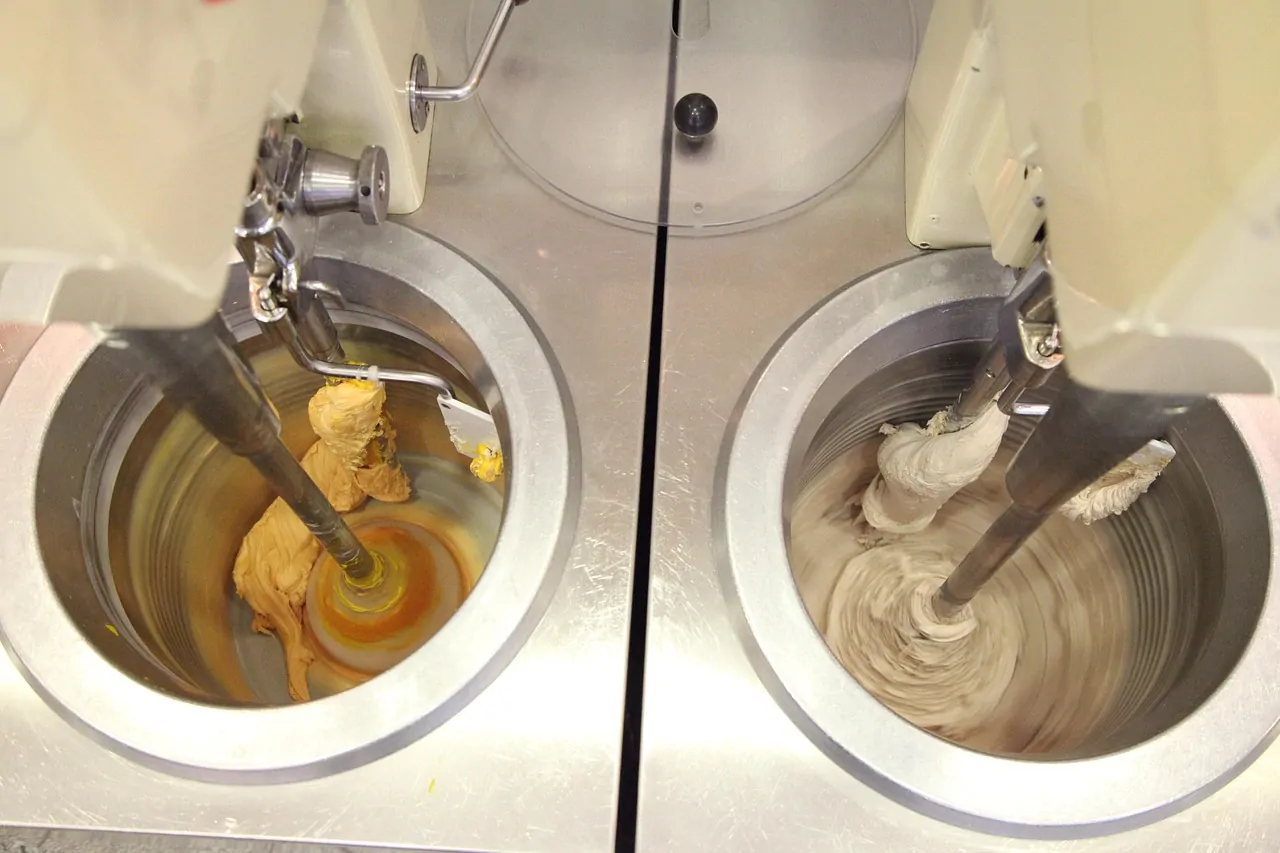
What “reliable” means in a commercial ice cream machine
Reliability is not a single part. It is the ability to finish a full production day, week after week, at your real mix load, without losing temperature control or tripping protection devices.
Three numbers describe it better than any marketing claim:
- Duty cycle — how many hours per day the machine is designed to run, not how fast it freezes once.
- Recovery time — how quickly a cylinder returns to serving temperature after a batch is drawn.
- Service interval — the manufacturer’s stated maintenance period and the parts that must be replaced on schedule.
A machine rated for “20 liters per hour” over a two-hour demonstration is not the same as a machine rated for 20 liters per hour across eight hours. Ask which number you are being quoted.
The six components that decide uptime
1. Compressor type and cooling headroom
The compressor is the most expensive component and the one that decides how the machine behaves under heat and continuous use. Hermetic compressors are common on smaller countertop units; semi-hermetic and scroll compressors appear on machines built for longer duty cycles.
The practical question is not the brand name but the headroom: how much cooling capacity remains at 32°C ambient and at your mix fat level. A machine sized to exactly your production target at 22°C will struggle at 32°C.
Scenario: A café in a glass-front space sees ambient temperatures near 33°C in July. Its single-cylinder machine rated at 12 L/hour freezes a batch in 22 minutes in spring but takes 31 minutes in July. The machine is not broken; it has no thermal headroom.
2. Cylinder and dasher design
The cylinder is where texture is made, and its geometry affects both quality and mechanical stress. A well-matched dasher scrapes the cylinder wall evenly, moves mix toward the door, and does not force the motor to fight partially hardened product.
Warning signs of a weak cylinder and dasher design: mix that freezes unevenly, a scraper blade that wears within months, and motors that draw high current near the end of a cycle.
Data point: Cylinder wear is usually measured in tenths of a millimeter. Once the wall is out of tolerance, the scraper can no longer clear it fully and freezing time climbs — often by 15–25% before anyone notices a fault code.
3. Motor, gearbox, and duty rating
Bevel gear, planetary gear, belt drive, direct drive — all four exist in commercial machines, and all four work when the duty rating matches the use. The failure mode is overworking a light-duty drive on a heavy mix, not the drive type itself.
Ask for the motor’s duty rating and whether the machine is approved for continuous production. If a supplier cannot answer, that is your answer.
Scenario: A shop producing pistachio and hazelnut pastes with 12% fat and heavy inclusions burns through two drive belts in a season because the drive is sized for standard 8% mix.
4. Controls and electrical protection
Electronics fail for boring reasons: heat, moisture, voltage sag, and connectors. A machine intended for a hot, wet, busy shop should have sealed connectors, a protection class appropriate to the washdown environment, and clear overload protection rather than a resettable fuse hidden inside the panel.
Look for phase protection on three-phase models and for controls that hold settings after a power interruption rather than reverting to a default cycle.
5. Refrigerant circuit quality
Brazing quality, drier sizing, and leak testing decide whether the machine still holds its charge after two years. This is genuinely difficult to judge from outside. Ask what leak-test pressure the factory uses, whether the circuit is evacuated and charged under documented procedure, and what the warranty says about refrigerant loss.
Data point: In most ice cream machine service reports, refrigerant loss and blocked capillary tubes appear alongside “not freezing” complaints — both are circuit problems, not operator problems.
6. Spare parts and service access
A machine with excellent internals and a six-week spare part lead time is unreliable in commercial terms. Check three things before purchase:
- Can the scraper blades, door gaskets, and seals be replaced by your own technician?
- Are the compressor, controller, and fan standard parts or proprietary?
- What is the quoted lead time for a replaced controller or door assembly?
Also look at physical access. A machine that requires the entire panel to be removed for a gasket change will cost more in labor every year.
Reliability comparison: what to check per machine class
| Machine class | Typical duty | Reliability focus | Watch for |
|---|---|---|---|
| Countertop single cylinder (4–6 L) | 2–5 hours per day | Compressor headroom, gasket quality | Overuse beyond rated duty |
| Floor-standing single/twin bowl | 4–8 hours per day | Motor duty, cylinder tolerance, service access | Undersized condenser, poor ventilation |
| Multi-bowl production machine | 8+ hours per day | Independent circuits, phase protection, parts availability | Shared circuit failures taking down all bowls |
| Continuous freezer | Shift production | Pump wear, control stability, cleaning-in-place design | Complexity without local service support |
Buying checklist: eleven questions to ask before you pay
- What is the rated duty cycle per day, stated in hours?
- What is the rated production at 32°C ambient, not at laboratory temperature?
- Which compressor model and cooling capacity are fitted?
- What is the cylinder material and its wear tolerance?
- What is the motor duty rating and drive type?
- What protection class do the controls carry?
- How is the refrigerant circuit evacuated, charged, and leak-tested?
- Which parts are considered consumable, and what do they cost?
- What is the spare part lead time for a controller and for a door assembly?
- What does the warranty exclude, in writing?
- Who services the machine in your city, and how fast can they attend?
Bring this list to every supplier you evaluate. The answers are comparable; brochures are not.
Three mistakes that shorten machine life
Running an undersized machine harder instead of longer
Operators often compensate for low capacity by pushing the machine through back-to-back cycles with no recovery time. This raises discharge temperatures and motor current, and it is the fastest route to premature failure. If you need more output, add capacity or extend production hours, but do not remove recovery time.
Skipping the daily cleaning routine
Residue on the cylinder wall and door gasket changes how the scraper loads the drive and how quickly the next batch freezes. Daily cleaning is a mechanical reliability practice, not only a hygiene practice.
Ignoring ventilation and ambient temperature
A machine installed in a closed alcove recycles its own hot air. Discharge pressure rises, freezing slows, and the compressor works harder for every batch. Ventilation clearance and room temperature belong in your purchase decision, not in your post-installation complaints.
FAQ
Do more expensive machines always last longer?
No. Price usually tracks capacity, materials, and controls. Reliability depends on whether those are matched to your duty cycle, ambient conditions, and mix. A well-chosen mid-range machine in a ventilated space can outlast a premium machine crammed into a hot corner.
Is a hermetic compressor a deal-breaker?
Not for light commercial use. It becomes a limitation when the machine runs many hours per day at high ambient temperature or with heavy mix. Match the compressor class to the duty, not to a general preference.
How long should a commercial hard ice cream machine last?
With correct sizing, ventilation, cleaning, and scheduled service, a commercial machine should deliver many years of service. The number depends far more on duty cycle and maintenance discipline than on the calendar.
Can I add a second machine later instead of buying larger now?
Often yes, and it can be the safer plan, provided your electrical supply, drainage, and floor space allow it. Two smaller machines also give you redundancy: if one needs service, you can still produce.
What single specification predicts trouble best?
Undersized cooling capacity for your real ambient temperature. It shows up as slower freezing, higher current draw, and shorter component life, and it cannot be fixed by better maintenance.
Next step
Send us your daily production target, peak-hour demand, ambient temperature, available power, and the flavors you plan to sell. We will tell you which machine class has the duty headroom for your shop, and which specifications to verify in writing before you order.
Request a GLACIO machine sizing review and we will compare your requirements against the GB series configurations.
Which failure has cost you the most production time — a compressor, a drive, or a control board? Tell us in the comments; the answers help other owners choose better.

Some information may be outdated
Comments
Questions about equipment capacity, voltage, or recipes? Leave a comment.
Loading comments...