Author: fanyue3

  • GB-1 vs GB-2 vs GB-4 vs GB-6 Hard Ice Cream Machine Guide

    GB-1 vs GB-2 vs GB-4 vs GB-6 Hard Ice Cream Machine Guide

    Quick answer: choose the GB-1 for a compact single-flavor counter, the GB-2 for two visible flavors, the GB-4 for a busy shop that needs four flavors and two independent refrigeration circuits, and the GB-6 for high-traffic service with six flavors and three circuits. Match the machine to peak-hour demand and flavor count, not to the largest output in the catalog.

    The GB-series models share a showcase concept: the freezing bowls are visible, so customers can watch the product being made. The difference is not only size. Each step adds output, flavor positions, electrical load, weight, and cleaning work.

    This guide compares the GB-1, GB-2, GB-4, and GB-6 using published specifications and realistic operating scenarios. Use it alongside the [commercial ice cream machine buying guide](https://fantehub.com/blog/posts/wp/wp-commercial-ice-cream-machine-buying-guide/).

    Reviewed by the GLACIO Machinery equipment team | Updated September 15, 2026 | 8 minute read
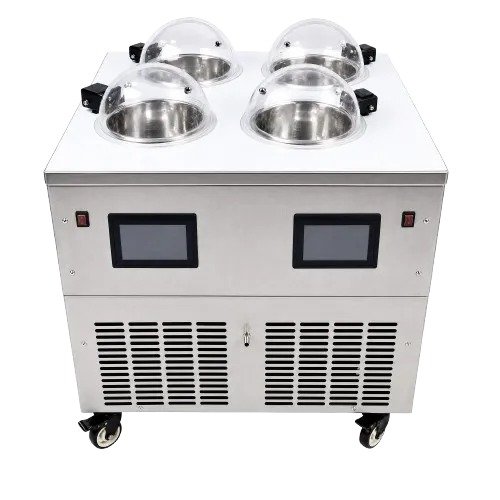
    GLACIO GB-4 showcase hard ice cream machine at counter height
    The GB-4 balances four visible flavors, 56 L/h nominal output, and two independent refrigeration circuits.

    Full GB-series specification comparison

    ModelBowlsNominal outputBatch timeCircuitsPowerDimensions (mm)WeightContainer
    GB-11 x 6 L14 L/h15-20 min11.6 kW / 220 V640 x 640 x 98096 kg24 units / 20GP
    GB-22 x 6 L28 L/h15-20 min12.5 kW / 220 V860 x 640 x 980138 kg16 units / 20GP
    GB-44 x 6 L56 L/h15-20 min24.8 kW / 220 V1080 x 980 x 1010235 kg8 units / 20GP
    GB-66 x 6 L84 L/h15-20 min37.2 kW / 220 V1500 x 980 x 1010330 kg6 units / 20GP

    All models in the published specification use a Tecumseh compressor, R290 refrigerant, heated clear domes, 304 stainless steel construction, touch controls, and a one-key auto-wash cycle. Confirm final configuration, voltage, certification, and options in the quotation for your destination.

    Start with the service model

    The machine should fit the way customers order, not the other way around.

    One flavor is enough

    A one-flavor counter can work in a bakery, coffee bar, small cafe, dessert kiosk, or restaurant that offers a fixed dessert. The menu is simple, changeovers are limited, and staff can become efficient with one recipe.

    The GB-1 fits this model. It uses one 6 L bowl, produces a nominal 14 L/h, and occupies a 640 x 640 mm footprint. It is the easiest model to place in a small front-of-house area.

    The limitation is obvious: if the single flavor sells out during peak service, the machine must complete another batch before the display is restored.

    Customers expect two or three choices

    Two flavors can cover a standard and a rotating seasonal option. That is enough for many cafes, hotels, restaurants, and small dessert counters. The GB-2 provides two 6 L bowls and 28 L/h nominal output in an 860 x 640 mm footprint.

    The GB-2 uses one refrigeration circuit. That keeps the machine simpler, but it also means the two bowls are not fully independent from a service standpoint. Ask about how the circuit is zoned and how the controller manages each bowl.

    Four flavors create a complete display

    Four flavors allow a shop to combine familiar staples with rotating options. A typical menu might include vanilla, chocolate, pistachio, and a fruit sorbet. The mix gives customers choice without requiring a very large production room.

    The GB-4 is the first model with two independent refrigeration circuits. It provides four 6 L bowls, 56 L/h nominal output, and a 1080 x 980 mm footprint. The two-circuit design supports flavor availability and allows half the machine to be serviced or turned off separately.

    For many independent gelato shops, this is the practical sweet spot.

    Six flavors require a high-traffic plan

    The GB-6 provides six 6 L bowls, 84 L/h nominal output, and three independent circuits. It suits a high-traffic gelato bar, a flagship store, a busy tourist location, or a business that wants a deep flavor display at all times.

    The operational requirements also increase. The machine is 1500 mm wide and weighs 330 kg. It needs more counter space, stronger logistical planning, and a workflow that keeps six flavors fresh without excessive waste.

    Capacity planning by model

    Nominal output is not the same as daily sellable volume. The machine must stop for loading, flavor changes, cleaning, and recovery. Use the published output as a ceiling, then apply an efficiency factor based on your operation.

    ModelNominal outputConservative planning outputBest fit
    GB-114 L/h8-11 L/hFixed menu or low-volume cafe
    GB-228 L/h17-22 L/hTwo-flavor counter
    GB-456 L/h34-45 L/hBusy shop with four flavors
    GB-684 L/h50-67 L/hHigh-traffic bar or flagship store

    The conservative range assumes normal cleaning, loading, and flavor changes. A high-volume operation with dedicated staff may achieve more. A shop with frequent single-batch changes may achieve less.

    Simple sizing example

    A shop sells 90 ml scoops and expects 180 scoops during a four-hour peak. The theoretical volume is 180 x 0.09 = 16.2 L. With 15% waste and refill loss, it needs about 19 L of production.

    If the peak is spread evenly over four hours, the average requirement is 4.8 L/h. That could fit the GB-1 on average. But if 70% of sales happen during one hour, the one-hour requirement is about 13.3 L. The GB-1 is at its nominal limit before allowing for recovery, and the GB-2 provides a safer buffer.

    This is why average daily demand can understate the required machine. Model the peak, then check how quickly the machine can recover.

    Power and installation differences

    The published models use 220 V power, but the total load rises from 1.6 kW on the GB-1 to 7.2 kW on the GB-6. Verify the exact running current, starting current, plug, breaker, and cable requirement with the final electrical specification.

    ModelPublished powerElectrical planning noteFootprint
    GB-11.6 kWOften suitable for a small dedicated circuit, subject to local codeCompact counter corner
    GB-22.5 kWAllow for refrigeration startup load and service accessNarrow two-bowl counter
    GB-44.8 kWPlan a robust dedicated supply and ventilationMedium front-of-house station
    GB-67.2 kWConfirm building capacity, heat load, and multi-circuit serviceLarge flagship counter

    Every installation should also account for condenser clearance, ambient heat, drainage, floor loading, and the route used to move the machine into position. A 330 kg machine cannot be treated like a countertop appliance.

    Cleaning and labor by model

    More bowls create more cleaning positions. The GB-1 is the fastest to clean and easiest for a small team. The GB-6 offers more production and flavor availability, but it also requires a disciplined closing procedure.

    A practical way to compare labor is to list every task:

    1. Remove and clean bowl covers.
    2. Drain or remove remaining product.
    3. Wash the bowl, dasher, scraper, and seals.
    4. Clean the control area and exterior stainless steel.
    5. Reassemble and sanitize.
    6. Run the auto-wash or rinse cycle.
    7. Record temperatures and maintenance issues.

    For a shop with high staff turnover, simpler equipment can be more valuable than maximum flexibility. For a stable team, a larger multi-circuit machine can improve service without creating an operational bottleneck.

    Which GB model should you choose?

    Choose GB-1 if:

    • You serve one flavor or change flavors only occasionally.
    • Your counter is small and the electrical supply is limited.
    • You are testing whether hard ice cream will sell.
    • You can refill the bowl before the peak period.

    Choose GB-2 if:

    • You need two staple flavors visible at once.
    • The shop has moderate traffic with predictable peaks.
    • You want a compact footprint with more output than the GB-1.
    • A single refrigeration circuit fits your service plan.

    Choose GB-4 if:

    • Customers expect four flavors during the main service period.
    • You want two independent refrigeration circuits.
    • You need 56 L/h nominal output without moving to a flagship-size machine.
    • The counter can support a 1080 x 980 mm machine.

    Choose GB-6 if:

    • Flavor variety is central to the customer experience.
    • The shop has high peak-hour demand and a large counter.
    • Three independent circuits improve production resilience.
    • The team can manage the additional cleaning and service work.

    Common model-selection mistakes

    Buying output without checking recovery. A machine that reaches temperature quickly still needs time between batches. Compare batch time, recovery, and cleaning time as one production cycle.

    Counting bowls instead of flavors sold. Four bowls are useful only if the shop can sell and maintain four flavors. Otherwise the additional capacity creates waste and cleaning work.

    Ignoring electrical reality. The largest model is not an upgrade if the building cannot support it without expensive electrical work.

    Using catalog output as daily output. Nominal output is a controlled rating. Real production includes loading, cleaning, changeovers, product removal, and operator breaks.

    Choosing the lowest quote without landed cost. Include freight, duties, electrical work, lifting, service, and spare parts when comparing suppliers.

    Frequently asked questions

    What is the difference between GB-2 and GB-4?

    The GB-2 has two 6 L bowls, 28 L/h nominal output, one circuit, and a smaller footprint. The GB-4 has four 6 L bowls, 56 L/h nominal output, two independent circuits, and requires more space and power.

    Is the GB-6 too large for a small shop?

    It can be. The GB-6 is designed for high traffic, six simultaneous flavors, and larger production. A small shop may pay more for capacity and cleaning work that it cannot use consistently.

    Can the GB-4 run with only half the machine on?

    The GB-4 has two independent refrigeration circuits, so the service plan can use or isolate sections. Confirm the exact control behavior and operating instructions for the final configuration.

    Which GB model is best for gelato?

    All four models can be considered for gelato production when the recipe, operating settings, and capacity fit the machine. Choose by flavor count and peak demand: GB-1 for one flavor, GB-2 for two, GB-4 for four, and GB-6 for six.

    What power supply do the machines need?

    The published specifications list 220 V for all four models, with power increasing from 1.6 kW to 7.2 kW. Final voltage, phase, current, plug, and breaker requirements must be confirmed for the exact model and destination.

    Match the model to the demand pattern

    The best GB model is the one that keeps the required flavors available during peak service without creating unnecessary capital cost or cleaning work. Begin with the number of flavors and the busiest hour, then apply a realistic recovery and waste factor.

    View the GB series specifications or send GLACIO your expected daily liters, scoops per hour, flavor count, voltage, and available counter dimensions. We will recommend the smallest model that still provides a safe production buffer.

    Which is more important in your shop: maximum flavor choice, lower cleaning workload, or the smallest possible footprint? Leave a comment and tell us how you would choose.
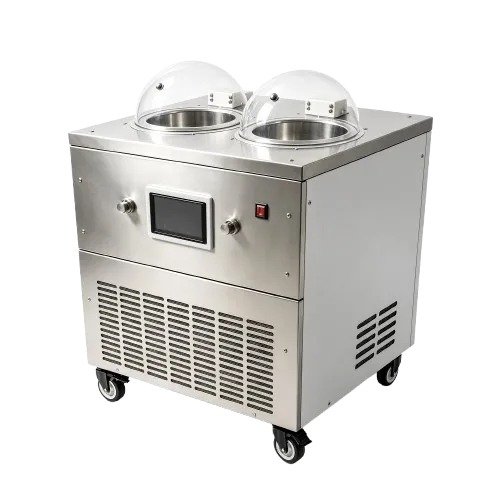
  • Commercial Ice Cream Machine Buying Guide: Cost and ROI

    Commercial Ice Cream Machine Buying Guide: Cost and ROI

    Quick answer: choose a commercial ice cream machine by matching sellable output, flavor count, peak-hour demand, available power, and service access – not by the lowest purchase price. For most independent shops, a batch freezer between 28 and 56 liters per hour is the practical starting range. Calculate payback with the installed cost, not the machine price alone, and target a defensible result within 12 to 24 months.

    That answer sounds straightforward, but equipment quotes often make comparison harder. One supplier advertises a large cylinder, another emphasizes horsepower, and a third lists a theoretical output that assumes perfect conditions. None of those numbers tells you whether the machine can serve a busy Saturday, hold enough flavors, or operate on the power already available in your building.

    This guide explains how to compare commercial ice cream machines as production tools. It covers machine types, hard ice cream versus soft serve, capacity math, refrigeration, installation, operating cost, total cost of ownership, and return on investment.

    Reviewed by the GLACIO Machinery equipment team | Updated September 15, 2026 | 12 minute read

    GLACIO GB-4 commercial hard ice cream machine with four open freezing bowls
    A four-bowl hard ice cream machine provides four visible flavors, two refrigeration circuits, and 56 L/h nominal output in the GLACIO GB series.

    What is a commercial ice cream machine?

    A commercial ice cream machine is production equipment designed to freeze a mix continuously or in batches, then hold the finished product at serving temperature. The category includes soft-serve freezers, hard-serve batch freezers, continuous freezers, gelato machines, frozen beverage machines, and combination units.

    For a cafe, gelato shop, restaurant, bakery, or small manufacturer, the most important distinction is not the shape of the machine. It is the production method and the texture the business needs to sell.

    Hard ice cream and hard serve

    Hard ice cream, also called hard serve, is frozen to a firm, scoopable consistency and usually held below serving temperature before display. The product can be packed into tubs, displayed in a dipping cabinet, or hardened for later distribution.

    A batch freezer is the common machine for this workflow. It freezes one measured batch in a cylinder or an open bowl, then discharges it when the target texture is reached. Typical batch times range from 15 to 30 minutes, depending on mix, starting temperature, overrun, and machine design.

    Soft serve

    Soft serve is drawn directly from a freezing cylinder at a warmer, softer consistency. It is usually served immediately in a cone or cup. A soft-serve machine can be excellent for high-volume counter service, but it is not a direct replacement for a hard ice cream batch freezer.

    If you are comparing the two formats, read the full hard ice cream machine vs soft serve machine guide.

    Gelato production

    Gelato is a formulation and process style rather than a machine size. Many gelato makers use a batch freezer with careful control of temperature, overrun, and ingredient addition. A hard ice cream machine can make gelato, sorbet, frozen yogurt, and other frozen desserts when the recipe and operating settings are suitable.

    The equipment question is therefore: what do you need to produce, how quickly, in what flavor mix, and at what serving temperature?

    How much capacity do you actually need?

    Do not size a machine from daily sales alone. Peak demand, flavor variety, batch time, cleaning, and recovery between batches determine whether the machine can keep the display full.

    Use this calculation:

    Required output per production hour = peak servings per hour x serving size / sellable yield factor

    Suppose a shop expects to sell 120 scoops during its busiest three-hour period. Each scoop is 90 ml, or 0.09 L. The theoretical product requirement is 10.8 L. If waste, samples, and incomplete tubs reduce sellable yield by 10%, the production requirement becomes about 12 L over those three hours.

    That does not mean a 4 L/h machine is sufficient. Production is not perfectly spread across the period. If most demand occurs in one hour, the machine must refill the display before it runs empty. A machine rated at 14 L/h can nominally cover that hour, but the operator still needs time for loading, flavor changes, cleaning, and recovery.

    A practical sizing buffer

    For a new shop, plan for at least 25% to 40% more output than the average day requires. The buffer protects the menu during weekends, holidays, catering orders, and local events.

    Daily sellable demandPractical production rangeLikely configurationPlanning note
    20-60 L/day14-28 L/h1-2 bowlsFirst cafe counter or limited menu
    60-120 L/day28-56 L/h2-4 bowlsBusy shop with several staple flavors
    120-220 L/day56-84 L/h4-6 bowlsHigh-traffic gelato bar or multi-channel sales
    More than 220 L/dayMultiple machinesParallel productionSeparate base flavors from seasonal batches

    These ranges are starting points, not guarantees. A 28 L/h machine that runs efficiently for six hours can produce more than a 56 L/h machine that is stopped for frequent cleaning and flavor changes.

    Flavor count changes the decision

    A machine with four freezing bowls does not only provide four times the nominal output. It gives the operator four simultaneous flavor positions. That matters when customers expect choice during a short lunch period.

    If a shop needs six flavors available all day, a two-bowl machine may require repeated emptying, cleaning, and refilling. The lost labor and missed sales can matter more than the difference in purchase price.

    The five machine types buyers compare

    Batch freezer with open bowls

    Open-bowl batch freezers combine production and display. The operator can see the product freeze, add inclusions, and serve from the same unit. They are popular in gelato shops and cafes because the equipment supports front-of-house theater.

    Consider an open-bowl machine when flavor visibility, small-batch flexibility, and counter service are important. Confirm that the bowls have adequate frost protection and that each refrigeration circuit can operate independently when the model claims separate circuits.

    Closed-cylinder batch freezer

    A closed-cylinder batch freezer uses a sealed freezing barrel. Product is frozen inside the cylinder and discharged through a door or chute. This design can produce consistent texture and is common in small manufacturing, catering, and hard ice cream production.

    It may offer less visual display value than an open-bowl machine, but it can be easier to load and clean for certain recipes. Compare cylinder volume, discharge method, beater design, and the maximum batch size.

    Continuous freezer

    A continuous freezer receives mix from a hopper and freezes it in a steady flow. It is designed for larger production volumes and often works with a hardening system. Output can be high, but changeovers between flavors are more complex.

    Choose a continuous freezer when demand is predictable and volume justifies dedicated production. For a shop that sells many small flavor batches, a batch freezer is often more flexible. See continuous freezer vs batch freezer for the full comparison.

    Soft-serve freezer

    A soft-serve machine freezes mix and dispenses it at a softer consistency. It can be highly efficient for cones, sundaes, and quick-service menus. It may include one, two, or more cylinders and can offer twists or separate flavors.

    The main limitation is product format. If the business sells scooped hard ice cream, tubs, cakes, or takeaway pints, soft serve is usually an additional product line rather than the main machine.

    Combination or multi-purpose machine

    Some machines claim to make gelato, hard ice cream, sorbet, pastry cream, and other products. Consider whether the machine can actually reach the required temperature, handle the mix viscosity, and provide the needed batch size. A broad product list is useful only when the controls and refrigeration system support repeatable results.

    Core specifications that affect real performance

    Compressor and refrigeration capacity

    The compressor is the heart of the machine. A larger nominal compressor does not automatically mean better freezing, because performance also depends on condenser design, refrigerant, ambient temperature, bowl geometry, and control logic.

    Ask for the rated cooling capacity and the ambient temperature used for the rating. A machine tested at a comfortable 20 C may behave differently in a hot kitchen. For commercial operation, verify that the refrigeration system can recover between batches instead of running continuously without pulling the product down.

    The GLACIO GB series uses a Tecumseh compressor and R290 refrigerant in the specifications shown on the product page. Confirm local refrigerant rules and service support before importing any machine.

    Freezing cylinder or bowl volume

    Batch size affects how much product can be made in one cycle. A machine with four 6 L bowls can produce up to four separate flavor batches, but the practical yield will be lower after losses and overrun.

    Do not compare total bowl volume with hourly output as if they are the same number. The hourly output depends on cycle time, how quickly the machine recovers, and how many batches the operator can complete.

    Independent circuits

    Independent refrigeration circuits allow one section to continue operating while another is cleaned or serviced. They also let the operator turn off unused bowls during slow periods.

    For a four-bowl machine, two circuits are a meaningful operational feature. For a six-bowl machine, three circuits reduce the risk that one fault stops the entire display. Ask how the circuits are controlled and whether each has independent temperature settings.

    Power and voltage

    Check voltage, phase, running current, starting current, and plug type before ordering. Many small batch freezers use 220 V single-phase power, but larger machines may require three-phase service or a dedicated circuit.

    The electrical connection is only one part of the installation. Confirm breaker capacity, cable size, isolation, and local code requirements with a qualified electrician.

    ModelBowlsNominal outputCircuitsPowerDimensions (mm)Weight
    GB-11 x 6 L14 L/h11.6 kW / 220 V640 x 640 x 98096 kg
    GB-22 x 6 L28 L/h12.5 kW / 220 V860 x 640 x 980138 kg
    GB-44 x 6 L56 L/h24.8 kW / 220 V1080 x 980 x 1010235 kg
    GB-66 x 6 L84 L/h37.2 kW / 220 V1500 x 980 x 1010330 kg

    See the detailed GB-1, GB-2, GB-4, and GB-6 selection guide for scenario-based recommendations.

    Cooling, ventilation, and drainage

    Refrigeration equipment moves heat into the surrounding space. A machine placed in a small room without ventilation will work harder, recover more slowly, and may shorten compressor life.

    Plan for clear airflow around the condenser, a service gap, and a route for cleaning water. If the machine is installed in a cabinet or under a counter, obtain the required clearance dimensions in writing. Never assume that the machine will fit simply because the external dimensions fit.

    Controls, cleaning, and service access

    A touchscreen is not automatically better than a simple mechanical control. Look for controls that operators can understand during a busy shift. Check whether the machine has automatic wash, frost protection, temperature display, batch timers, and diagnostic codes.

    Cleaning time affects effective output. A machine that takes 45 minutes to clean after every flavor change can lose more production time than a smaller machine that cleans in 15 minutes.

    Ask these service questions before buying:

    • Which parts wear first, and what do they cost?
    • How long does a typical repair take?
    • Are spare bowls, gaskets, seals, boards, and compressors available?
    • Does the supplier provide English wiring diagrams and error-code instructions?
    • Can a local technician obtain support without waiting for an overseas reply?

    What does a commercial ice cream machine cost?

    The purchase price is only one line in the project budget. A realistic budget should include transport, import duties, unloading, installation, electrical work, ventilation, water treatment, staff training, initial spare parts, and a maintenance reserve.

    For planning, separate the costs into four groups:

    Cost groupExamplesHow to plan
    AcquisitionMachine, options, cratingGet a landed-cost quote, not only FOB
    InstallationElectrical, drainage, ventilation, movingObtain local contractor quotes
    LaunchTraining, recipe trials, packagingBudget for product waste during testing
    OperationEnergy, labor, cleaning, maintenance, downtimeModel monthly cash cost

    A cheap machine can become expensive if it cannot maintain temperature during peak service or if replacement parts take weeks to arrive. Conversely, an oversized machine can tie up cash and consume more cleaning time than the business needs.

    How to calculate commercial ice cream machine ROI

    ROI should answer a simple question: how much incremental cash contribution does the machine create, and how long does that contribution take to repay the installed cost?

    Start with the contribution per serving:

    Contribution per serving = selling price – ingredients – packaging – variable labor – payment fees

    Then estimate monthly contribution:

    Monthly contribution = incremental servings x contribution per serving – added fixed costs

    Finally, calculate payback:

    Payback months = total installed cost / monthly contribution

    A worked example

    Assume a new machine has a landed and installed cost of $18,000. It creates an average contribution of $3.20 per incremental serving after ingredients, packaging, and variable labor. The shop expects 450 additional servings per month, while added energy, maintenance, and cleaning labor cost $650 per month.

    Monthly contribution before fixed operating costs is $3.20 x 450 = $1,440. After $650 of added operating costs, the net monthly contribution is $790. Simple payback is $18,000 / $790, or about 23 months.

    That result may still be acceptable if the machine also protects flavor availability, supports catering, or allows the shop to remove a slower production process. But the decision should be made with the downside case visible.

    Use the commercial ice cream machine ROI calculator guide to test low, base, and high demand scenarios.

    Total cost of ownership: what buyers forget

    Total cost of ownership includes everything required to keep the machine producing saleable product over its service life.

    CostTypical planning questionRisk if ignored
    EnergyHow many production hours per day?Understated monthly operating cost
    LaborWho loads, cleans, and changes flavors?Hidden overtime and inconsistent batches
    MaintenanceWhat is the annual service reserve?Surprise downtime during peak season
    WasteHow much product is lost during trials and changeovers?Lower effective yield and weaker margins
    DowntimeWhat happens if the only machine stops?Lost sales and damaged customer trust
    FinancingWhat is the cost of capital?A positive cash flow can still have a weak return

    For a small shop, a practical maintenance reserve is often 3% to 6% of the machine’s purchase price per year. Use the higher end when the machine runs long shifts in a hot environment or has limited local service.

    Installation planning before the machine arrives

    The best time to solve installation problems is before the shipping crate reaches the door.

    1. Measure the route from the truck to the final position, including turns, door widths, lifts, and floor protection.
    2. Confirm the floor can support the machine’s weight plus product and accessories.
    3. Verify voltage, phase, breaker size, cable route, and earth connection.
    4. Provide the required ventilation and condenser clearance.
    5. Plan drainage and cleaning-water access without creating a slip hazard.
    6. Leave enough service clearance for a technician to reach the compressor and controls.
    7. Train at least two people on startup, cleaning, and fault recovery.

    The commercial ice cream machine installation checklist contains a more detailed pre-delivery inspection list.

    How to evaluate a supplier

    Machine specifications matter, but supplier capability determines whether the equipment remains productive after installation.

    Ask for:

    • Actual photos or video of the exact model, not only a catalog render.
    • A test report showing batch time and product temperature.
    • A complete electrical diagram and parts list.
    • Clear packaging dimensions and container loading data.
    • Warranty terms that explain labor, parts, shipping, and exclusions.
    • Evidence of service experience in your country or region.
    • A reference customer using the machine in a similar application.

    For a new business, start with a written requirement sheet. Include the expected daily output, flavor count, voltage, ambient temperature, available space, cleaning workflow, and maximum acceptable downtime. A supplier that answers those constraints with numbers is easier to trust than one that only promises "high quality."

    Which machine should you buy?

    There is no universal best commercial ice cream machine. The right choice depends on the business model.

    Choose a smaller 1-bowl or 2-bowl machine if you are testing demand, serving a limited menu, or working in a small cafe. Choose a 4-bowl machine if you need several flavors visible at once and want two refrigeration circuits. Choose a 6-bowl machine if flavor variety and peak-hour availability are core to the customer experience.

    If you also sell wholesale, catering, or takeaway pints, add the required hardening and storage capacity to the calculation. Production output without enough hardening space creates a new bottleneck.

    Frequently asked questions

    What size commercial ice cream machine do I need?

    Start with peak servings per hour, serving size, flavor count, and batch time. A small cafe may need 14-28 L/h. A busy shop with several flavors often needs 28-56 L/h. A high-traffic gelato bar may need 56-84 L/h or multiple machines.

    Is a hard ice cream machine the same as a batch freezer?

    Not always, but batch freezers are the most common machines for hard ice cream and hard serve production. A batch freezer freezes a measured batch, while a continuous freezer produces a steady flow for larger-volume manufacturing.

    How long does a commercial ice cream machine take to make one batch?

    Many batch freezers complete a cycle in 15-30 minutes. The actual time depends on mix temperature, recipe, overrun, ambient conditions, bowl volume, and the target texture. Always compare batch time and recovery time together.

    Do I need three-phase power?

    Not necessarily. Some small and mid-size batch freezers use 220 V single-phase power, while larger or higher-output systems may require three-phase service. Check the exact model specification and have an electrician verify the building supply.

    Can one machine make ice cream, gelato, and sorbet?

    Many batch freezers can process those products if the machine reaches a suitable temperature and the recipe is adjusted for the mix. Confirm the product range, batch size, and cleaning method with the supplier before purchase.

    How long should the payback period be?

    There is no universal target. A 12-24 month payback is a useful planning range for many small food businesses. A longer payback may be justified by strategic value, but it should be supported by conservative demand and operating assumptions.

    Should I buy the cheapest machine with the required capacity?

    Only after comparing refrigeration performance, service access, parts availability, installation cost, cleaning time, and warranty support. A lower purchase price can be offset by downtime, energy use, or poor batch consistency.

    Compare the machine against your actual production plan

    A commercial ice cream machine is a capacity investment. The saleable output, flavor availability, labor workflow, and service support determine whether it helps the business. Start with peak-hour demand, add a realistic buffer, then compare installed cost and operating cost against incremental cash contribution.

    Browse the GB series product line or send the GLACIO team your expected daily output, flavor count, voltage, and available space. We will help you compare the GB-1, GB-2, GB-4, and GB-6 on the same production assumptions.

    What is the hardest number for you to estimate: peak servings, flavor changes, power, or payback? Leave a comment and tell us which part of the buying decision needs the most work.

  • Open Bowl vs Closed Cylinder Ice Cream Machine: Which Should You Buy?

    Open Bowl vs Closed Cylinder Ice Cream Machine: Which Should You Buy?

    Quick answer: choose an open-bowl ice cream machine when you sell several flavors, change batches often, and want staff to see and manage the product directly. Choose a closed-cylinder machine when you run fewer recipes, need a more enclosed production process, or want a traditional batch freezer with product extracted at the end of each cycle.

    The choice is not about which design is automatically better. It is about how your menu, staff, peak hours, cleaning routine, and counter layout work together. For most cafes, gelato bars, bakeries, and small dessert shops, flavor flexibility matters more than brochure output. For a producer running the same base recipe for hours, enclosed cylinders and larger systems can be more efficient.

    This guide breaks the decision into the numbers and operating conditions that matter before you pay a deposit.

    Reviewed by the GLACIO Machinery equipment team | Updated September 15, 2026 | 9 minute read

    GLACIO four-bowl commercial hard ice cream batch freezer with open bowls

    GLACIO open-bowl batch freezer. Product photo: GLACIO Machinery.

    What is an open-bowl ice cream machine?

    An open-bowl machine, often called a display batch freezer or open-bowl gelato machine, lets the operator work with visible refrigerated bowls or cylinders. The product stays accessible for checking texture, adding inclusions, switching flavors, and serving or transferring the batch.

    The useful benefit is operational, not decorative. Staff can see whether a batch is too soft, too hard, or uneven before it reaches the display case. A shop with eight flavors can prepare smaller runs throughout the day instead of committing one large machine to a single recipe.

    Open-bowl machines are common in:

    • Gelato and hard ice cream shops with rotating flavors.
    • Cafes and bakeries adding dessert sales without a full production kitchen.
    • Bubble tea shops testing gelato or sorbet as an add-on.
    • Small producers that sell cups, cones, pints, and desserts from one menu.
    • Businesses that need dairy, vegan, and allergen-sensitive batches separated.

    What is a closed-cylinder machine?

    A closed-cylinder batch freezer freezes mix inside an enclosed barrel. The operator loads the mix, runs a cycle, and extracts the finished batch through a door or outlet. The freezing process is less visible, but the machine can be designed for consistent cycles and straightforward sanitation.

    Closed-cylinder machines can be a strong fit when:

    • One or two recipes make up most of production.
    • The team follows a fixed formulation and cycle program.
    • The machine feeds trays, blast freezing, packaging, or a larger production line.
    • Floor space or operator exposure is a concern.
    • The business values a more enclosed process over visible bowl-by-bowl control.

    Closed cylinders are not the same as soft-serve machines. A hard ice cream batch freezer still produces a firm product that must be hardened, stored, and scooped. The difference is how the mix is frozen and how the operator manages each batch.

    Open bowl vs closed cylinder: direct comparison

    Decision factorOpen-bowl machineClosed-cylinder machineWhich usually wins
    Flavor changesSmall visible batches; easier to change recipesPossible, but often slower between runsOpen bowl
    Product visibilityStaff can inspect texture and mix-insFreezing process is enclosedOpen bowl
    Allergen separationEasier to isolate dairy, vegan, or nut batches by bowl or circuitDepends on cleaning and program controlOpen bowl, when circuits are independent
    CleaningMore accessible surfaces can be faster to inspectBarrel cleaning follows a defined procedureDepends on machine design
    High-volume consistencyGood when batches are scheduled wellStrong for repeatable, longer production runsClosed cylinder
    Peak-hour flexibilityAdd a batch when demand appearsBetter for planned productionOpen bowl
    Training difficultyVisual feedback helps new staffRequires disciplined cycle controlOpen bowl for beginners
    Counter appealCan support a visible preparation storyMore utilitarian appearanceOpen bowl
    Space useMay need clearance for bowls and domesCan fit a tighter production footprintClosed cylinder
    Best business fitMulti-flavor shop, cafe, bakery, food hallProducer with limited recipes and steady volumeTie, based on menu

    The real cost is changeover time

    A machine with a higher liters-per-hour rating can still lose to an open-bowl machine if changeovers, cleaning, and recovery time are poor.

    Use a practical production cycle, not just the freezing timer:

    1. Measure and load the mix.
    2. Freeze the batch.
    3. Extract or transfer the product.
    4. Clean the bowl, dasher, and contact surfaces.
    5. Allow the refrigeration system to recover before the next batch.

    For a small shop, the last two steps often decide whether staff can serve the next flavor during the lunch rush. A 6-liter batch that takes 30 minutes to freeze but 20 minutes to change over is not producing 12 liters per hour in real life. Its usable output may be closer to 7 liters per hour.

    Example: a shop selling 80 scoops per hour

    Assume a 90-gram scoop and a 65% usable-production factor. The shop needs roughly 7.2 liters of finished product per peak hour. If a machine freezes a 6-liter batch in 30 minutes, the theoretical output looks like 12 liters per hour. After extraction, cleaning, and recovery, the practical output may be 7 to 8 liters per hour.

    That is enough for the example, but there is little cushion. If a flavor becomes unexpectedly popular, the machine cannot recover quickly enough. For this reason, calculate peak demand separately from daily demand. A machine can handle 100 liters across a day and still fail during a 90-minute rush.

    Read the related guide on batch freezer sizing by daily sales for a fuller capacity calculation.

    Six specifications that matter more than the label

    1. Independent circuits

    A four-bowl machine with one refrigeration circuit cannot run every bowl independently. If the machine has two circuits, one section can keep producing while the other is cleaned or held at serving temperature.

    Ask the supplier to identify which bowls share a compressor. This is especially important if you sell dairy and vegan products or need to isolate a major allergen.

    2. Bowl or cylinder volume

    Batch size should match your smallest commercially useful recipe, not just your biggest bowl. A 10-liter bowl is inefficient if your test flavors sell only 3 liters per day. A 4-liter bowl is limiting if weekend demand requires repeated refills.

    For a multi-flavor shop, think in terms of flavor turns rather than total bowl count. Each bowl needs enough demand to justify the labor and ingredient cost of a batch.

    3. Compressor and recovery time

    The compressor must maintain a stable freezing temperature while the dasher works the mix. A lower number of watts does not always mean a weaker machine, but the refrigeration system must be matched to batch size and cycle time.

    Ask for the recovery time after a full batch, not only the initial freeze time. That number shows how quickly the machine can start the next flavor.

    4. Contact materials and sanitation access

    Stainless steel and food-grade materials should be easy to inspect. Removable parts should not hide mix in seams or sharp corners. Confirm the cleaning procedure and the time it takes one person to complete it.

    Where required by your market, look for the applicable electrical and sanitation certifications. Do not assume that a CE mark or UL listing automatically covers every local requirement. Verify the exact model and its documentation.

    5. Power and installation fit

    Commercial machines may use single-phase or three-phase power depending on model and market. Before ordering, confirm voltage, phase, frequency, circuit breaker size, plug type, and whether the building needs an electrical upgrade.

    The commercial ice cream machine installation checklist covers voltage, drainage, ventilation, and service clearance. It is worth reviewing before the quote is finalized.

    6. Spare parts and service response

    A machine is only productive when it can be repaired. Ask for the parts list, warranty terms, typical response time, and the name of the local or regional service partner. For export orders, confirm whether common wear parts ship with the machine.

    How to choose open bowl or closed cylinder in five questions

    1. How many flavors do you sell each day? More than four active flavors usually points toward open bowls or multiple independent circuits.
    2. How often do you change a batch? Frequent flavor changes favor a visible, accessible machine.
    3. What is your peak-hour demand? Calculate scoops and grams per hour, then add a 20% to 30% buffer.
    4. Do you need allergen separation? If yes, prioritize independent bowls, circuits, and a documented cleaning process.
    5. Will the machine be a production tool or part of the customer experience? Open bowls can support both; closed cylinders usually prioritize production.

    If the answers point in different directions, buy capacity in modules. Two smaller independent machines may be more useful than one oversized machine with a single production chamber.

    Best fit by business type

    Business typeStarting choiceReason
    Neighborhood gelato shopOpen bowl with 2-4 bowlsFlavor variety, visible quality control, flexible batches
    Cafe or bakeryCompact open-bowl machineSmall footprint, menu testing, easy staff training
    Food hall or kioskOne or two independent circuitsLimited space but high visibility and quick flavor changes
    Bubble tea shopOpen bowl with dairy and vegan separationAdd-on sales and allergen control
    Pint or tub producerClosed cylinder or larger batch freezerRepeatable cycles and packaging workflow
    Producer above 300-500 L per dayContinuous or hybrid systemHigher throughput and lower labor per liter

    If production is moving beyond one machine, compare continuous freezer vs batch freezer before adding equipment.

    Common buying mistakes

    • Comparing only the bowl size and ignoring compressor recovery time.
    • Counting bowls instead of independent circuits.
    • Assuming brochure output is the same as sellable output.
    • Forgetting that hardening, storage, and display capacity must match the freezer.
    • Buying a production machine before testing real daily demand.
    • Choosing a machine without confirming local voltage and service support.
    • Ignoring the labor cost of cleaning eight bowls instead of four.

    Frequently asked questions

    Is an open-bowl ice cream machine better for gelato?

    For many small gelato shops, yes. Open bowls make it easier to inspect texture, change flavors, and separate dairy from vegan batches. A closed-cylinder machine can still make excellent gelato when the recipe and cycle are controlled.

    Can an open-bowl machine make hard ice cream?

    Yes. The distinction is the machine architecture, not the finished product. A hard ice cream batch freezer must still reach the correct draw temperature and the product must be hardened before scooping.

    How many bowls do I need?

    Start with daily flavor demand and peak-hour output. A practical starting point is one production bowl for every four to six active flavors, then add a second circuit when cleaning or peak-hour refills become the bottleneck. See how many bowls an ice cream shop needs.

    Can one machine produce dairy and vegan flavors?

    It can when the machine is fully cleaned between recipes and the supplier confirms that the materials and cleaning method are suitable. If cross-contact risk is high, separate bowls, circuits, or machines provide stronger control.

    What output do I need for 100 scoops per day?

    At 90 grams per scoop, 100 scoops equal about 9 liters of finished product, before waste and sampling. Add a production buffer and calculate peak-hour demand separately. A machine that meets the daily total may still be too slow during peak sales.

    Choose the machine around the menu, not the brochure

    The best choice is the one that keeps the right flavors available at the right time with a cleaning and recovery routine your team can repeat. Open bowls win on flexibility and visibility. Closed cylinders win on enclosed, repeatable production. Most small food businesses should start by measuring peak demand, counting real flavor changes, and checking independent circuits.

    Send GLACIO your peak-hour scoop estimate, flavor count, voltage, and available counter space. Request a specification-based open-bowl machine recommendation and we will help you compare bowl count, output, and installation requirements.

    What is harder in your shop right now: changing flavors, keeping up during peak hours, or cleaning between batches? Leave a comment with your current setup.

  • Commercial Ice Cream Machine ROI: How to Calculate Payback Before You Buy

    Commercial Ice Cream Machine ROI: How to Calculate Payback Before You Buy

    Quick answer: calculate commercial ice cream machine ROI by dividing the total installed cost by the monthly cash contribution the machine creates. Use incremental servings, not total store sales. Subtract ingredients, packaging, added labor, energy, and a maintenance reserve. A machine that returns its installed cost in 12 to 18 months is usually easier to justify than one that needs more than 24 months without a strategic reason.

    That formula sounds simple, but most equipment proposals hide the important assumptions. They show a machine price and a theoretical output, then leave the buyer to guess how many additional cups the shop will sell. The result is a purchase decision based on optimism instead of a cash-flow model.

    This guide gives you a repeatable way to test the numbers before you sign the quote.

    Reviewed by the GLACIO Machinery equipment team | Updated September 15, 2026 | 9 minute read

    Gelato display case with multiple flavors in a shop

    The machine creates capacity. Sales, menu design, and utilization create the return. Photo: Nilo Velez, CC0.

    The payback formula in one line

    Payback months = total installed cost / average monthly cash contribution

    Where:

    Monthly cash contribution = incremental servings x contribution per serving – added labor – added energy – maintenance reserve

    The word incremental matters. If a customer was already buying a coffee and now adds gelato, the gelato sale contributes new revenue. If the customer simply switches from a brownie to a gelato cup at the same price and margin, the machine may improve the menu without creating much new cash.

    What belongs in the installed cost

    The machine price is only one line. Use a total installed cost in the numerator:

    Cost itemTypical planning rangeWhy it matters
    Machine and standard accessoriesVendor quoteBase equipment and bowls
    Freight and export documentationQuote or freight forwarderOften excluded from list price
    Import duty and local taxesLocal authority or brokerChanges delivered cost
    Electrical work and circuit protection$300-$2,000+Voltage, phase, breaker, and cable
    Drainage, ventilation, floor, or counter changesProject quoteCan exceed the machine cost in an old building
    Installation and commissioningQuote or local technicianConfirms the machine runs correctly
    Initial training and recipe setup1-3 daysReduces waste and startup mistakes
    Spare parts and first service reserve3%-8% of machine priceProtects uptime
    Working capital for mix and packaging2-4 weeks of inventoryNeeded before revenue starts

    For a small shop, a machine quoted at $10,000 can become a $12,000-$15,000 project after freight, electrical work, installation, and startup inventory. Using only the sticker price understates the investment and makes the payback look better than it is.

    The commercial ice cream machine cost guide breaks down more of these line items.

    Step 1: Estimate incremental daily servings

    Do not start with machine capacity. Start with demand you can realistically convert.

    Use three estimates:

    • Conservative: current customer traffic and a modest attachment rate.
    • Base: a normal seasonal week with active menu promotion.
    • Upside: holiday, event, wholesale, or multi-location demand.

    For a cafe or bakery, a common first-year range is 20 to 60 additional gelato or hard ice cream servings per day. That is not a promise. It is a planning range that must be tested against local traffic, price, menu placement, and seasonality.

    If the shop already sells desserts, ask how many customers currently skip dessert or buy a lower-margin item. Those are the customers most likely to convert. If the shop has no dessert traffic, the ramp will usually be slower because the machine needs a new buying occasion.

    Step 2: Calculate contribution per serving

    Contribution is revenue minus variable cost. It is not the same as profit after rent and all overhead.

    Example for a 140-gram gelato cup or cone:

    ItemExample
    Selling price$5.00
    Ingredient cost$0.95
    Cup, cone, spoon, napkin$0.30
    Packaging waste and samples$0.10
    Contribution per serving$3.65

    The exact number depends on recipe, portion size, local ingredient costs, and waste. Keep the formula in a spreadsheet so the assumptions can be changed.

    Use this checklist:

    1. Record the served portion in grams.
    2. Calculate cost per gram from the batch recipe, including mix-ins.
    3. Add the disposable package and utensil.
    4. Include a waste allowance for samples, overrun, and discarded batches.
    5. Subtract only variable costs to get contribution.

    Step 3: Subtract added operating costs

    A new machine rarely adds zero labor or energy. Even a self-contained batch freezer needs loading, cleaning, temperature checks, and restocking.

    Added monthly costConservative example
    Labor to produce and clean$600-$1,500
    Electricity and refrigeration$120-$450
    Maintenance reserve$80-$250
    Extra cleaning supplies$40-$150
    Spoilage above normal$50-$200

    The ranges vary widely by country, utility price, wage, machine size, and production schedule. Track your actual numbers after the first month instead of relying on vendor estimates.

    A practical payback example

    Assume a shop buys an installed commercial batch freezer for $12,000.

    Conservative scenario: 30 additional servings per day

    • Contribution per serving: $3.65.
    • Additional servings: 30 per day.
    • Selling days: 26 per month.
    • Gross contribution: 30 x $3.65 x 26 = $2,847.
    • Added labor, energy, maintenance, and waste: $1,300.
    • Monthly cash contribution: $1,547.
    • Payback: $12,000 / $1,547 = 7.8 months.

    Base scenario: 60 additional servings per day

    • Gross contribution: 60 x $3.65 x 26 = $5,694.
    • Added operating costs: $1,800.
    • Monthly cash contribution: $3,894.
    • Payback: $12,000 / $3,894 = 3.1 months.

    Downside scenario: 20 additional servings per day

    • Gross contribution: 20 x $3.65 x 26 = $1,898.
    • Added operating costs: $1,100.
    • Monthly cash contribution: $798.
    • Payback: $12,000 / $798 = 15.0 months.

    The difference between 20 and 60 daily servings changes the decision. That is why a machine quote should never be judged without a demand range.

    The batch freezer sizing guide shows how to connect servings and batch capacity.

    Interpret the payback period

    Payback is a screening tool, not a guarantee. Use it with the rest of the business case.

    ResultHow to read itNext action
    Under 12 monthsStrong on cash-flow assumptionsStress-test demand and service costs
    12-18 monthsUsually reasonable for a productive assetConfirm labor and peak-hour utilization
    18-24 monthsLess forgivingLook for menu or wholesale upside
    Above 24 monthsNeeds a strategic reasonRecheck equipment size, price, or demand
    No positive contributionThe model does not work yetFix menu, price, utilization, or cost before buying

    Payback also ignores the value of the machine after the period. A well-maintained commercial freezer can continue producing for years, so the first-year payback is not the entire return. It is the point where cumulative cash contribution equals the initial cash outlay.

    Break-even servings per day

    Another useful number is the number of servings needed to cover the machine’s monthly cash cost.

    Break-even servings = monthly added cash cost / contribution per serving

    Using the conservative example:

    • Monthly added cash cost: $1,300.
    • Contribution per serving: $3.65.
    • Break-even: 356 servings per month, or about 14 servings per day across 26 days.

    The machine does not create a return above the break-even line until every additional serving contributes cash. A shop that expects 20 servings per day has a narrow cushion. A shop that can realistically sell 40 or more has a more resilient case.

    Five assumptions that ruin an ROI calculation

    1. Counting total sales as incremental sales

    Do not attribute every scoop in the shop to the new machine. Some customers would have bought another dessert anyway. Compare the new menu against the previous menu, not against zero.

    2. Using brochure output as sellable output

    Freezing, extraction, cleaning, and recovery time all reduce practical output. Use a usable-production factor instead of the ideal hourly rating. The batch freezer comparison explains why planned production and flexible production have different labor profiles.

    3. Ignoring labor

    A machine does not remove the work. It changes who does the work and when. Add the cost of mixing, loading, cleaning, labeling, and restocking. If the shop is already short-staffed during peak hours, include the cost of training and scheduling relief.

    4. Forgetting power and installation

    The electrical service, breaker, cable, drainage, and ventilation can add several thousand dollars to a project. Check the installation checklist before assuming the quoted machine is the final price.

    5. Skipping maintenance

    Preventive maintenance protects both uptime and product quality. Budget 3% to 8% of the machine price per year for inspections, wear parts, and service. A stalled machine during peak season can cost far more than the maintenance reserve. The maintenance checklist is a useful planning baseline.

    Which machine configuration improves payback?

    The best ROI is usually not the cheapest machine and not the largest machine. It is the configuration that matches real demand without creating unused capacity.

    Business conditionConfiguration to evaluateROI logic
    Fewer than 4 active flavorsCompact single or dual bowlLower capital and simpler cleaning
    4-8 active flavorsDual-circuit or 4-bowl machineFewer flavor gaps and better peak flexibility
    High peak-hour demandMultiple independent circuitsKeeps production running during cleaning
    Dairy and vegan menuSeparate bowls or circuitsReduces changeover risk and improves menu value
    Growth to 300-500 L per dayHybrid batch and continuous systemProtects flexibility while lowering labor per liter
    Pint or tub productionBatch freezer plus hardening and packagingProduction only pays back when downstream steps keep up

    Use the bowl-count guide to test flavor coverage, and review the gelato shop equipment checklist before ordering the complete system.

    A one-page ROI checklist

    Before approving the purchase, write down:

    1. Installed cost, including freight, taxes, electrical work, and training.
    2. Conservative, base, and upside daily servings.
    3. Contribution per serving after ingredients and packaging.
    4. Added labor, energy, maintenance, and waste.
    5. Payback at each demand scenario.
    6. Break-even servings per day.
    7. Peak-hour capacity after cleaning and recovery.
    8. Hardening, storage, and display capacity.
    9. Service response and spare-parts availability.
    10. The date when actual performance will be reviewed against the model.

    If the downside case still produces positive cash contribution and a payback you can tolerate, the purchase has a defensible business case. If it only works in the upside case, reduce the equipment scope or improve demand before buying.

    Frequently asked questions

    What is a good payback period for a commercial ice cream machine?

    A payback of 12 to 18 months is a practical planning target for many small food businesses. A shorter period is stronger, but it still depends on whether the sales assumptions are realistic. A longer period can make sense when the machine unlocks a strategic menu, wholesale channel, or multi-location capability.

    Should I calculate ROI using revenue or profit?

    Use cash contribution, not gross revenue. Subtract ingredients, packaging, added labor, energy, maintenance, and waste from the incremental sales created by the machine.

    How many servings per day does a commercial machine need to sell?

    There is no universal number. Calculate break-even as monthly added cash cost divided by contribution per serving. In the example above, a $1,300 monthly cost and $3.65 contribution require about 356 servings per month, or 14 per day over 26 selling days.

    Does a larger machine always produce a better return?

    No. A larger machine can reduce labor per liter, but it also increases capital cost, cleaning time, power demand, and the risk of unused capacity. Match the machine to peak demand and flavor count.

    How quickly can a new machine pay back if it replaces an old one?

    Replacement ROI should include avoided repair costs, lower downtime, better yield, reduced labor, and additional sales. Compare the new installed cost against the cash savings and new contribution, not just the old machine’s book value.

    What is the biggest mistake in equipment ROI?

    Counting all sales or brochure output as new profit. Use incremental demand and sellable output, then test the model with conservative numbers.

    Related commercial ice cream machine buying guides

    Model the purchase before you commit

    A commercial ice cream machine creates value when it increases sellable output, protects flavor availability, and produces cash contribution above its operating cost. Start with three demand scenarios, include every installation and operating cost, and calculate both payback and break-even servings. The result will tell you whether the machine is an investment, a convenience purchase, or a capacity risk.

    Send GLACIO your expected daily servings, selling price, ingredient cost, production hours, voltage, and flavor count. Request a capacity and ROI review and we will help you compare machine configurations with the assumptions written down.

    What is your biggest uncertainty in the payback model: demand, labor, energy, or equipment price? Leave a comment and tell us which number you want to test first.

  • How to Scale Ice Cream Production from 100 to 500 Liters per Day

    How to Scale Ice Cream Production from 100 to 500 Liters per Day

    Scaling ice cream production from 100 to 500 liters per day is not solved by buying one larger freezer. It requires a balanced system of mix preparation, pasteurizing, aging, freezing, hardening, storage, packaging, cleaning, and labor.

    The safest approach is modular growth. Add capacity in stages, measure the bottleneck after each change, and keep enough redundancy to protect sales during equipment service. A single oversized machine can create large batches of the wrong flavor and leave the rest of the production room behind.

    This guide shows how to plan capacity from 100 to 500 liters per day and where most producers lose money.

    Colorful ice cream and sorbet display case
    Photo: Raju Alam, CC0

    Quick answer: what changes between 100 and 500 liters?

    Daily productionProduction approachFreezer planMain risk
    100 L/daySmall batch operation10-20 L machine or two smaller circuitsLabor and cleaning time
    200 L/dayScheduled batch production20-30 L or dual-bowl machinePeak-hour capacity
    300 L/dayTwo production windowsMultiple batch freezersMix and hardening bottlenecks
    400 L/daySemi-continuous batch flowParallel production and dedicated hardeningStorage and staffing
    500 L/dayHybrid or continuous productionContinuous line plus batch flexibilityLine downtime and mix supply

    These are planning examples. The needed capacity depends on batch size, cycle time, mix temperature, flavor changes, overrun, and hours available per day.

    Step 1: Calculate real daily liters

    Start with sellable liters, then add production loss.

    Required mix volume = sellable liters x (1 + waste and sampling allowance)

    If a shop sells 400 liters and loses 10% to sampling, flushing, spillage, and rejected batches, it needs about 440 liters of usable production capacity.

    Then add a peak buffer:

    Planning capacity = normal daily demand x 1.2 to 1.4

    The buffer covers holidays, promotions, wholesale orders, and equipment downtime.

    Step 2: Calculate batches and production hours

    Production is limited by cycle time and available labor.

    Batches per day = production hours / (freezing time + extraction + cleaning and recovery)

    Example:

    • Available production window: 8 hours.
    • Batch cycle including cleaning: 40 minutes.
    • Theoretical batches: 12.
    • Batch size: 30 liters.
    • Theoretical output: 360 liters.

    But not every hour is productive. Flavor changes, mix loading, labeling, tray movement, and staff breaks reduce real output. Plan for 70-80% of theoretical capacity.

    Step 3: Fix the first bottleneck before buying more capacity

    The bottleneck changes as production grows.

    At 100 liters per day

    Common bottlenecks:

    • Small freezer cylinder.
    • Slow cleaning between flavors.
    • Manual labeling and tray handling.
    • Insufficient cold storage.

    First improvement:

    • Standardize batch recipes.
    • Pre-label containers and trays.
    • Keep mix at the correct temperature.
    • Track actual cycle times.

    At 200 liters per day

    Common bottlenecks:

    • One operator doing every task.
    • Freezer recovery between batches.
    • Display and storage trays filling at the same time.
    • Mix preparation competing with production.

    First improvement:

    • Add an independent freezing circuit.
    • Separate mix preparation from extraction.
    • Create a written production schedule by flavor.

    At 300 liters per day

    Common bottlenecks:

    • Hardening capacity.
    • Freezer cleaning.
    • Ingredient preparation.
    • Packaging and order picking.

    First improvement:

    • Add rapid hardening.
    • Organize flavor production into families.
    • Reserve time for maintenance.
    • Track downtime and reject rates.

    At 400-500 liters per day

    Common bottlenecks:

    • One freezer becoming a single point of failure.
    • Mix supply and aging capacity.
    • Labor overtime.
    • Storage and distribution.

    First improvement:

    • Add redundancy or a continuous line for core recipes.
    • Separate core flavors from seasonal batches.
    • Plan maintenance around production.

    Step 4: Match freezer capacity to the production model

    Single-bowl batch freezer

    Good for a limited menu and predictable production. It works best when one operator can clean and prepare the next batch while the current batch freezes.

    Dual-bowl batch freezer

    Two independent circuits increase output and protect flavor separation. They also reduce the impact of cleaning or maintenance on one side. This is often the best transition from 100 to 300 liters per day.

    Multiple batch freezers

    Several machines provide redundancy and let operators run different flavors at the same time. The disadvantage is more floor space, electrical capacity, cleaning, and training.

    Continuous freezer

    A continuous freezer is worth considering when a few core recipes run for hours and the filling line is stable. It improves labor efficiency but reduces flexibility for small seasonal batches.

    Hybrid production

    Many growing manufacturers keep batch freezers for specialty flavors and use continuous freezing for high-volume retail products.

    Use the continuous freezer vs batch freezer guide to compare the two systems.

    Step 5: Build the supporting capacity

    At 100 liters per day, the freezer may be the most visible purchase. At 500 liters per day, the supporting systems determine whether the business can actually deliver.

    Mix preparation

    You need enough scales, mixing tanks, pasteurizing capacity, and chilled holding capacity to feed the freezers without waiting.

    Aging

    Aging tanks must hold the next production run, not only today’s batch. If production increases but aging capacity stays the same, the freezer will wait.

    Hardening

    Rapid hardening protects texture and lets you move product through the system. Check:

    • Tray dimensions.
    • Load per cycle.
    • Airflow.
    • Recovery time.
    • Ability to handle peak production.

    Storage and distribution

    Retail packs, foodservice tubs, and display trays need different storage layouts. Plan freezer space by SKU, not just total volume.

    Cleaning

    As volume grows, cleaning becomes a production task. A machine that takes 60 minutes to clean can consume more labor than a faster machine saves.

    Step 6: Plan labor before adding machines

    At 100 liters per day, one person may cover mixing, freezing, packing, and cleaning. At 500 liters per day, those tasks compete.

    Create roles by function:

    • Mix preparation and ingredient scaling.
    • Freezer operation and quality checks.
    • Hardening and packaging.
    • Cleaning and sanitation.
    • Inventory and order picking.

    Track labor per liter. If labor per liter rises while output grows, the process is not scaling efficiently.

    Step 7: Use a simple capacity scorecard

    Review these numbers every week:

    MetricWhy it matters
    Liters producedMeasures actual output
    Liters soldShows demand versus production
    Batch cycle timeFinds freezer and cleaning delays
    Recovery timeShows lost capacity between batches
    Labor hours per literIdentifies inefficient growth
    Reject or waste rateShows recipe and equipment problems
    Freezer uptimeProtects delivery commitments
    Hardening utilizationFinds the next bottleneck
    Storage utilizationPrevents stockouts and overproduction

    Use data from the scorecard to decide the next investment.

    A 500-liter-per-day example

    Suppose a producer needs 500 sellable liters per day and runs two shifts.

    Option A: Batch-only

    • Three 30-liter machines.
    • Real output of 70-80% of theoretical capacity.
    • One dedicated mix operator.
    • Two freezer operators.
    • Rapid hardening and two storage zones.

    Option B: Hybrid

    • One continuous line for 350 liters of core recipes.
    • One dual-bowl batch freezer for 150 liters of seasonal flavors.
    • Shared mix kitchen and hardening.

    The hybrid model protects flexibility while reducing labor per liter on high-volume products.

    Common scaling mistakes

    1. Buying one oversized freezer. Large batches increase risk and reduce flavor flexibility.
    2. Ignoring mix temperature. Warm mix slows freezing and reduces daily output.
    3. Forgetting hardening. Product cannot be sold while it is still soft.
    4. Adding production without storage. Overproduction creates waste.
    5. Scheduling by machine, not by flavor. Frequent changeovers reduce output.
    6. Removing maintenance time. Equipment eventually stops the line for you.
    7. Tracking total liters only. Cost per liter and labor per liter show whether growth is profitable.

    Frequently asked questions

    How many batch freezers do I need for 500 liters per day?

    It depends on batch size, cycle time, and production hours. At 30 liters per batch and 45 minutes per complete cycle, one machine can theoretically produce 320 liters in 8 hours. Real output will be lower, so most producers need multiple machines, longer hours, or a continuous line.

    Is it better to buy one large machine or two smaller ones?

    Two smaller machines provide more flexibility and redundancy. One large machine may reduce labor and floor space but creates a single point of failure.

    How much capacity buffer should I build?

    Plan for 20-40% above normal daily demand. The buffer covers growth, seasonal peaks, sampling, and maintenance.

    Can I scale without a continuous freezer?

    Yes. Many businesses reach 300-500 liters per day with multiple batch freezers, better scheduling, rapid hardening, and dedicated mix preparation.

    What is the first upgrade after adding freezer capacity?

    Usually mix preparation, hardening, or storage. The next bottleneck appears immediately after freezer output increases.

    Scale the system, not just the machine

    Growing from 100 to 500 liters per day requires balanced capacity across production, freezing, hardening, storage, packaging, cleaning, and labor. Add capacity in measurable stages and keep batch flexibility for premium or seasonal products.

    Send us your current liters per day, peak output, equipment list, available power, and production hours. Ask GLACIO for a production scale-up review and we will help identify the right freezer configuration and the next bottleneck to solve.

    What is limiting your production right now: freezing, labor, hardening, or storage? Leave a comment and tell us about your current daily output.

  • Continuous Freezer vs Batch Freezer: Which Is Right for Your Ice Cream Business?

    Continuous Freezer vs Batch Freezer: Which Is Right for Your Ice Cream Business?

    Choose a batch freezer when you produce many flavors in smaller runs and need flexibility. Choose a continuous freezer when you produce large volumes of a limited number of recipes and need steady output for tubs, bars, or retail distribution.

    The dividing line is usually not a single number, but most small shops can operate profitably with batch freezers below roughly 300-500 liters per day. A continuous system becomes more attractive when one recipe runs for hours, labor is expensive, and packaging requires a consistent flow of product.

    This guide compares both systems by cost, output, flavor changes, labor, texture, and real business scenarios.

    Gelato display case with multiple flavors
    Photo: Nilo Velez, CC0

    Quick answer

    Business situationBetter starting choiceWhy
    Cafe, bakery, or small dessert shopBatch freezerFlexible batch sizes and lower startup cost
    Gelato shop with many flavorsBatch freezerEasy recipe changes and independent production bowls
    Ice cream shop producing 100-300 L per dayBatch freezer or multiple batch machinesLower complexity and easier scheduling
    Producer running one recipe for hoursContinuous freezerStable flow and lower labor per liter
    Retail tub, bar, or novelty producerContinuous freezerConsistent output for packaging lines
    Business with frequent seasonal flavorsBatch freezerFast changeovers and smaller minimum runs
    Factory-scale producer above roughly 500 L per dayContinuous freezer or hybrid lineHigh throughput and automation

    The final decision should come from peak demand, recipe count, packaging format, labor cost, and available capital.

    What is a batch freezer?

    A batch freezer freezes a measured amount of mix in a cylinder. When the batch reaches the required texture, the operator extracts it and starts the next batch.

    Typical batch size:

    • Small countertop or compact machine: 1-6 liters.
    • Cafe and small shop machine: 5-12 liters.
    • Commercial shop machine: 10-30 liters.
    • Large production batch freezer: 30-60 liters or more.

    Batch freezers fit businesses that need:

    • Multiple flavors in one production day.
    • Small test batches.
    • Fast recipe changes.
    • Separate dairy, vegan, or allergen-sensitive production.
    • A lower initial investment.

    The tradeoff is that production is cyclical. Loading, freezing, extraction, cleaning, and recovery time all affect output.

    What is a continuous freezer?

    A continuous freezer receives a steady flow of mix and freezes it continuously. The operator sets overrun, viscosity, and output, then the machine feeds product to a filler, tray system, or packaging line.

    Continuous freezers are common in:

    • Industrial ice cream production.
    • Large retail tub production.
    • Ice cream bars and novelties.
    • Long runs of one or two recipes.
    • Operations with automated packaging.

    They offer high output per labor hour, but they require stable mix supply, accurate formulation, reliable cleaning procedures, and enough downstream capacity. A continuous freezer is not useful if the hardening room or packaging line cannot keep up.

    Side-by-side comparison

    FactorBatch freezerContinuous freezer
    Production styleBatch by batchContinuous flow
    Best daily volumeSmall to mediumMedium to high
    Flavor changesEasy and frequentSlower and less frequent
    Startup costLowerHigher
    Labor per literHigherLower at high volume
    Recipe flexibilityHighLower
    Packaging integrationManual or semi-automaticStrong fit for automated lines
    Texture controlOperator-controlled per batchRecipe and machine settings
    CleaningAfter each production run or flavor groupFull line cleaning between runs
    Expansion methodAdd another machine or larger cylinderIncrease line capacity or add a second line
    Common usersShops, cafes, bakeries, small producersFactories, distributors, large retail brands

    How output changes the decision

    Up to 100 liters per day

    A batch freezer is usually the practical choice. Demand is still variable, flavors change often, and a continuous line would create unnecessary cleaning and scheduling complexity.

    At this level, focus on:

    • Reliable batch size.
    • Reasonable cycle time.
    • Easy cleaning.
    • Enough hardening and storage space.

    100-300 liters per day

    A larger batch freezer or two independent batch machines often works better than a continuous system. The shop can produce several flavors, respond to weather and events, and avoid a single point of failure.

    Calculate output from peak periods, not annual averages. A shop that sells 200 liters on a normal day but 350 liters on a holiday needs capacity for the higher day.

    300-500 liters per day

    This is the transition zone. Batch production can still work with:

    • Multiple batch freezers.
    • Two or more independent circuits.
    • Dedicated mix preparation.
    • Rapid hardening.
    • A clear production schedule.

    Continuous freezing becomes more attractive when one recipe runs for several hours and downstream packaging is consistent.

    More than 500 liters per day

    A continuous line usually lowers labor per liter and improves packaging consistency. However, the decision should include mix preparation, pasteurizing, aging, freezing, filling, hardening, storage, and cleaning.

    The freezer is only one part of the line. A high-output freezer connected to a weak hardening system simply moves the bottleneck downstream.

    Labor: the hidden cost difference

    Batch production requires repeated loading, extraction, cleaning, and monitoring. One operator may manage several machines, but the work is still cyclical.

    Continuous production can run a steady flow with fewer interventions, but it requires:

    • Reliable mix supply.
    • Trained operators.
    • A packaging line that stays synchronized.
    • Strong preventive maintenance.
    • Fast response when the line stops.

    A useful comparison is cost per liter, not machine price alone:

    Labor cost per liter = total production labor cost / usable liters produced

    If a batch system produces 200 liters with 6 labor hours and a continuous system produces the same volume with 3 hours, the labor difference may justify the higher equipment cost over several years.

    Texture and overrun control

    Batch freezers give operators direct control over each batch. They can adjust extraction temperature, overrun, and texture based on the recipe.

    Continuous freezers require the recipe and machine settings to remain stable. They are excellent for repeatable retail products, but a formula change can require new settings, testing, and packaging adjustments.

    Overrun affects both yield and texture:

    • Lower overrun creates a denser product and uses more mix per liter.
    • Higher overrun increases yield and creates a lighter texture.
    • Too much overrun can make the product weak, icy, or difficult to package.

    The right target depends on the product, market expectation, and price point. A premium gelato shop may target a different overrun than a grocery tub brand.

    Cost comparison

    Planning ranges vary by capacity, automation, refrigerant, country, and support.

    SystemTypical planning rangeMain cost driver
    Small batch freezer$3,500-$12,000Cylinder size and compressor
    Medium batch freezer$10,000-$30,000Output, dual circuits, controls
    Large batch freezer$25,000-$60,000+Capacity and automation
    Entry continuous freezer$40,000-$100,000+Output, controls, and line integration
    Full continuous production line$100,000-$500,000+Capacity, filling, hardening, automation

    Add electrical work, mix preparation, pasteurizing, aging, hardening, packaging, installation, and service. Read the commercial ice cream machine cost guide before comparing quotes.

    Three business examples

    1. Gelato shop with 24 flavors

    A shop needs small batches, frequent flavor changes, and separate vegan production. A batch freezer with independent cylinders is the stronger choice. Continuous freezing would make small seasonal batches inefficient.

    2. Bakery producing private-label tubs

    A bakery runs four recipes in large volumes for grocery accounts. If each recipe can run for several hours and packaging is automated, a continuous freezer may reduce labor and improve consistency.

    3. Growing producer moving from 200 to 600 liters per day

    The producer already uses batch freezers and wants to expand. The best route may be:

    • Keep batch machines for seasonal and premium flavors.
    • Add a continuous line for high-volume retail recipes.
    • Use a shared mix kitchen, hardening, and cold storage.

    This hybrid model preserves flexibility while lowering the cost per liter for core products.

    Common mistakes

    1. Buying a continuous line before demand is stable. High capacity is expensive when the line runs only a few hours per day.
    2. Ignoring flavor changeover. A machine that is fast for one flavor can be slow when the menu changes every batch.
    3. Forgetting hardening capacity. Production is not finished when the product leaves the freezer.
    4. Comparing machine price only. Labor, energy, maintenance, mix loss, and downtime matter.
    5. Depending on one machine. A second batch freezer may be more valuable than one oversized unit.

    Frequently asked questions

    Is a batch freezer better than a continuous freezer?

    A batch freezer is better for many flavors, variable demand, and smaller production runs. A continuous freezer is better for high-volume runs, stable recipes, and automated packaging.

    Can a continuous freezer make gelato?

    Yes, but the recipe, overrun, texture, and packaging need to be designed for continuous production. Gelato shops with frequent flavor changes often prefer batch freezers.

    At what volume should I switch to continuous freezing?

    There is no universal number. Many businesses switch around 300-500 liters per day when a small number of recipes run consistently and labor or packaging efficiency becomes the main constraint.

    Is a batch freezer easier to clean?

    Usually yes for small runs and frequent flavor changes. Continuous lines require cleaning and sanitation of the complete product path, including filling and packaging equipment.

    Can I use both systems?

    Yes. A hybrid setup uses batch freezers for flexibility and continuous freezing for high-volume core recipes.

    Choose based on the business, not the brochure

    Choose batch freezing when flexibility, flavor variety, and manageable startup cost matter most. Choose continuous freezing when stable recipes, high volume, and automated packaging justify a larger integrated line.

    Send us your daily liters, peak output, number of recipes, packaging format, available power, and labor plan. Ask GLACIO for a freezer comparison and we will help identify where batch, continuous, or hybrid production makes the most sense.

    How many flavors do you produce on your busiest day? Leave a comment and tell us what limits your current output.

  • Gelato Shop Equipment Checklist: What You Need Before Opening Day

    Gelato Shop Equipment Checklist: What You Need Before Opening Day

    The essential gelato shop equipment is a batch freezer, pasteurizer or mix preparation system, aging tank, blast freezer, storage freezer, display case, accurate scales, thermometers, cleaning equipment, and a complete serving station. A small shop may combine several functions in one machine; a larger shop may separate them to protect throughput and food safety.

    The most common opening-day mistake is buying equipment as a list of individual machines. Gelato production is a chain. Mix preparation affects freezing time, freezing affects texture, hardening affects shelf life, and display temperature affects what customers actually taste. Every piece must fit the demand of the one before and after it.

    Use this checklist to plan the workflow from delivery door to display case.

    Gelato display case inside a shop
    Photo: Nilo Velez, CC0

    Quick answer: the gelato shop equipment checklist

    AreaEssential equipmentWhat it controls
    Mix preparationScales, thermometer, whisk, pasteurizer or hot-process systemRecipe accuracy and food safety
    AgingCovered aging tank or suitable refrigerated containerFlavor, texture, and freezing consistency
    FreezingBatch freezer with one or more cylindersOverrun, texture, output, and flavor separation
    HardeningBlast freezer or rapid-hardening cabinetFinal texture and shelf life
    StorageCommercial freezer with airflow and labelsStock control and product safety
    DisplayGelato display case or pozzetti systemService temperature and visual appeal
    CleaningThree-compartment sink, sanitizer, brushes, spare gasketsHygiene and machine reliability
    ServiceScoops, trays, cups, cones, spoons, toppings, labelsSpeed and presentation
    SafetyThermometers, gloves, cleaning logs, first-aid suppliesCompliance and consistent operation

    Your exact list depends on whether you make gelato from a prepared base, pasteurize from raw ingredients, or buy a ready-to-freeze mix.

    1. Mix preparation equipment

    Good gelato begins before the batch freezer. Your production area needs accurate measurement and temperature control.

    Required items

    • Digital scale with at least 0.1 g resolution for stabilizers and flavors.
    • Larger scale for milk, cream, sugar, and fruit.
    • Calibrated probe thermometer.
    • Stainless-steel mixing containers.
    • Whisk, immersion blender, or batch mixer.
    • Recipe cards or a production system that records batch numbers.
    • Label printer or waterproof labels.

    Optional upgrades

    • Pasteurizer for consistent heating and cooling.
    • Homogenizer for a smoother mix.
    • Fruit-processing equipment for purees and inclusions.
    • Ingredient prep refrigerator close to the production table.

    If you pasteurize in house, document the temperature and holding time. Food-safety requirements vary by location, so confirm the rules with your local health authority before designing the room.

    2. Aging and refrigeration

    Many gelato mixes need time to hydrate, stabilize, and develop flavor before freezing. An aging tank keeps the mix at a controlled temperature and makes the next production step more predictable.

    For a small shop, a covered refrigerated container can work if temperature is monitored and the mix is used within the approved time. For a busy shop, a dedicated aging tank reduces handling and protects consistency.

    Look for:

    • Easy-to-clean interior surfaces.
    • Accurate temperature control.
    • Protection from cross-contamination.
    • Enough capacity for the next production day.
    • Clear labeling for flavor, date, and batch number.

    Plan aging capacity around your production schedule. If you make 20 liters in the morning and another 20 liters in the afternoon, a 20-liter tank may be too small when yesterday’s mix is still waiting.

    3. Batch freezer

    The batch freezer turns the prepared mix into gelato. It is usually the most expensive and most important production machine in the shop.

    Ask these questions before choosing a model:

    • How many liters does each cycle produce?
    • How long does a cycle take with a typical gelato mix?
    • How long is the recovery time between batches?
    • Does it have one bowl or independent circuits?
    • Can it handle dairy, fruit, chocolate, and nut flavors without cross-contamination?
    • How difficult is cleaning?
    • What voltage and breaker size does it require?
    • Are gaskets and control parts available locally?

    If your menu has several popular flavors, read the batch freezer sizing guide before ordering. A machine can look large enough in total liters yet still block sales during peak hours because the cycle time is too long.

    4. Hardening and storage

    Gelato leaving the batch freezer is soft. It needs rapid hardening before it reaches its final serving texture.

    Blast freezer

    A blast freezer lowers the product temperature quickly, limits ice-crystal growth, and gives you better control over shelf life. Check tray dimensions, airflow, batch load, and recovery time. A blast freezer that is too small creates a queue behind the batch freezer.

    Storage freezer

    Use a commercial freezer with airflow around every container. Do not stack warm product tightly. Every container should have:

    • Flavor name.
    • Production date.
    • Batch number.
    • Allergen information.
    • Use-by date or rotation code.

    The display case is not long-term storage. It is a selling tool, and product should rotate through it according to demand.

    5. Display equipment

    Gelato display cases do more than keep product cold. They protect texture, show color and inclusions, and help staff serve quickly.

    Check:

    • Temperature range and recovery after opening the lid.
    • Number of pans or trays.
    • Visibility from the customer side.
    • Access angle for staff.
    • Drainage and cleaning access.
    • Power requirements.
    • Ability to separate allergens.

    If you expect a high turnover of many flavors, compare a traditional display case with a pozzetti system. The best choice depends on your service style, not only on appearance.

    6. Cleaning and sanitation

    Gelato contains dairy, sugar, fruit, nuts, and other ingredients that support microbial growth. Cleaning is part of production, not a task left for closing.

    Plan for:

    • Three-compartment sink or approved wash area.
    • Food-safe sanitizer and test strips.
    • Dedicated brushes for cylinders, gaskets, drains, and floors.
    • Spare gaskets and small replacement parts.
    • Drainage that keeps wastewater away from food surfaces.
    • Cleaning logs for machines, display cases, and freezers.
    • Staff training on full disassembly and reassembly.

    A machine that takes an hour to clean after every flavor change will reduce your menu flexibility. Ask the supplier to demonstrate cleaning before purchase. This is especially important for shops that plan to sell vegan and dairy flavors from the same production area.

    7. Service counter and packaging

    The production room and service counter must work together during the busiest hour.

    Essential service items include:

    • Gelato scoops and warm-water container.
    • Serving trays and pan scrapers.
    • Cups, cones, spoons, napkins, and lids.
    • Toppings, sauces, and allergy-safe tools.
    • Labels, price cards, and flavor signs.
    • Point-of-sale system or register.
    • Waste bins placed out of the customer path.

    Keep a restock plan for peak days. Running out of cups or clean scoops slows service just as surely as a machine breakdown.

    Equipment layout: build a flow, not a collection

    A practical small-shop layout follows this sequence:

    1. Receiving and dry storage: ingredients enter and are checked.
    2. Preparation: scaling, mixing, pasteurizing, and cooling.
    3. Aging: covered refrigerated holding.
    4. Freezing: batch freezer close to mix and trays.
    5. Hardening: blast freezer within easy carrying distance.
    6. Storage: labeled freezer stock.
    7. Display: product moves to the front case.
    8. Service: staff serve and restock without crossing dirty cleaning zones.

    Draw this flow on the floor plan. If staff must carry open product through a customer area or past dirty dishes, the layout will create delays and safety risks.

    A realistic equipment budget

    For a small independent gelato shop, the production side often falls into these planning ranges:

    • Batch freezer: $8,000-$22,000.
    • Pasteurizer or mix system: $5,000-$25,000, depending on capacity and automation.
    • Aging tank or refrigerated holding: $1,500-$8,000.
    • Blast freezer: $3,000-$15,000.
    • Display case: $3,000-$12,000.
    • Storage freezers and preparation equipment: $3,000-$10,000.

    These are broad planning ranges. Shipping, electrical work, plumbing, ventilation, customs, and installation are additional. Review the full commercial ice cream machine cost guide before setting the final budget.

    Seven-day opening checklist

    Seven days before

    • Confirm machine voltage, breaker, drain, and ventilation.
    • Run a full cleaning and reassembly drill.
    • Test every recipe with the actual base and inclusions.
    • Check display-case temperature recovery.

    Three days before

    • Produce shelf-stable test batches and label them.
    • Train staff on batch records and allergen separation.
    • Confirm supplier delivery schedules.
    • Prepare cleaning logs and opening checklists.

    One day before

    • Chill mix to the recommended temperature.
    • Clean and sanitize all product-contact parts.
    • Stock cups, cones, spoons, labels, and toppings.
    • Set the display case and freezers to their operating temperatures.

    Opening morning

    • Record temperatures before production.
    • Freeze the first batch and check texture.
    • Confirm display rotation and flavor cards.
    • Keep a small batch plan in reserve for unexpected demand.

    Frequently asked questions

    What equipment is essential for a gelato shop?

    At minimum, you need accurate mix preparation tools, a batch freezer, rapid hardening, storage, a display case, cleaning equipment, and a safe service station. Pasteurizing and aging equipment become more important as production volume and food-safety requirements increase.

    Can one machine pasteurize and freeze gelato?

    Some combination machines perform multiple functions. Check the actual cycle time, capacity, cleaning routine, and local food-safety approval before relying on one machine for every production step.

    How much display space do I need?

    Estimate the number of flavors you sell during peak hours and the number of pans you need for each one. Add space for backups and seasonal flavors. A display case that is too small causes frequent restocking and temperature swings.

    Do I need a blast freezer?

    It is strongly recommended for a shop that wants consistent texture and controlled production. If volume is very low, a commercial freezer and careful tray management can work, but hardening will take longer and quality control is harder.

    Build the workflow before the shopping list

    The right gelato shop equipment plan connects mix preparation, freezing, hardening, storage, display, and cleaning. When one link is undersized, the whole shop slows down.

    Send us your planned number of flavors, daily liters, peak-hour demand, room dimensions, and available power. Request a GLACIO shop equipment review and we will help you identify the production capacity and layout questions to settle before opening day.

    Which piece of equipment worries you most: the batch freezer, pasteurizer, or display case? Leave a comment and tell us what you are planning.

  • Commercial Ice Cream Machine Installation: Voltage, Drainage, and Ventilation

    Commercial Ice Cream Machine Installation: Voltage, Drainage, and Ventilation

    Before installing a commercial ice cream machine, confirm four things in writing: the required voltage and amperage, the breaker and cable size, the drain and water requirements, and the clearance needed for heat removal. Most small commercial batch freezers use 208-240 V single-phase power, but larger machines may require three-phase service, a disconnect switch, and a dedicated circuit.

    Installation is not a final-day decision. The electrical panel, floor drain, room temperature, and delivery route all need to be checked before the machine arrives. If any one of them is wrong, the machine can sit unused while you pay for urgent construction work.

    Use this checklist to coordinate the supplier, electrician, plumber, and shop contractor.

    Gelato served in a cone
    Photo: Jakub Kapusnak, CC0

    Quick answer: what does a commercial ice cream machine need?

    RequirementTypical small machineTypical larger machine
    Voltage208-240 V, single phase208-240 V or 380-480 V, three phase
    Dedicated circuit16-32 A30-60 A+
    BreakerSized to machine nameplate and local codeDedicated breaker and disconnect
    WaterNot required for air-cooled models; potable supply for water-cooled modelsSupply, shutoff, and approved connection
    DrainIndirect drain with air gapLarger drain and accessible cleanout
    VentilationRear and side clearance plus room heat removalDedicated exhaust or mechanical cooling may be required
    FloorLevel, water-resistant, able to support machine weightReinforced floor or equipment stand
    ClearanceFollow supplier drawing; commonly 15-30 cm rear and 30-60 cm service sideMore room for service, airflow, and extraction

    The nameplate and installation manual always override a general table. Voltage, amperage, phase, refrigerant, and clearance requirements vary by model.

    1. Start with a site survey

    Complete the site survey before you order a machine or sign a lease improvement plan.

    Measure and record:

    • Door width, hallway turns, and lift access.
    • Production-room floor dimensions.
    • Distance from the electrical panel.
    • Available breaker spaces and panel capacity.
    • Floor drain location and slope.
    • Water supply location and pressure.
    • Ceiling height and overhead obstructions.
    • Room temperature and existing ventilation.
    • Delivery route from the truck to the final position.

    A 200 kg machine cannot be moved through a narrow service door. A machine that fits the room may still be impossible to service if the electrical panel or side panel cannot be opened.

    2. Electrical requirements

    Read the nameplate

    Look for:

    • Voltage: for example, 220 V.
    • Phase: single or three phase.
    • Frequency: usually 50 or 60 Hz.
    • Full-load amperage.
    • Refrigeration power.
    • Recommended breaker.
    • Plug type or hardwired connection.

    Do not select a breaker from the machine’s "running watts" alone. Compressor startup current is higher than steady-state current, and the circuit must handle the complete machine plus local code requirements.

    Add headroom

    A practical rule is to size the circuit with at least 25-30% headroom above the machine’s full-load current, then confirm the final size with a qualified electrician. A machine rated at 20 A should not be placed on a circuit that is already close to its limit because of lights, refrigerators, or another appliance.

    Check voltage drop

    A long cable run can lower voltage during startup. The compressor may run hot, fail to start, or trip the breaker. Ask the electrician to calculate voltage drop for the actual distance from the panel and to use the correct conductor size.

    Use a dedicated circuit

    The machine should have its own breaker and, when required, a lockable disconnect. Do not share a circuit with mixers, display cases, or kitchen equipment that cycles on and off.

    3. Water supply and drainage

    Air-cooled machines may have no water connection, but many production rooms still need water for cleaning and mix preparation. Water-cooled machines require a potable supply, a shutoff valve, and correct flow and pressure.

    Plan these items:

    • Water line with accessible shutoff.
    • Approved backflow protection where required.
    • Flexible connection that does not support the machine’s weight.
    • Indirect drain connection with an air gap.
    • Floor drain or approved receptor near the machine.
    • Drain line with enough fall for cleaning water and defrost.

    Never connect a food-equipment drain directly to a sewer line without the air gap required by local code. Wastewater can contaminate the machine or production area if the drain backs up.

    4. Ventilation and room temperature

    An air-cooled ice cream machine moves heat from the freezing process into the room. A small machine may release 2-5 kW of heat; a larger machine can release much more. If the room has no exhaust or cooling, the compressor works harder and cycle times increase.

    Check:

    • Rear and side clearance from the installation manual.
    • Airflow path around the condenser.
    • Room temperature at the hottest part of the day.
    • Exhaust or make-up air requirements.
    • Clearance for cleaning the condenser.

    Do not place the machine in a sealed closet or against a wall that blocks airflow. Heat trapped around the condenser lowers output and shortens component life.

    5. Floor, stand, and service access

    The machine must be level and stable. Vibration can loosen fittings, increase noise, and affect freezing consistency.

    For a production machine, consider:

    • Reinforced floor or a rated equipment stand.
    • Sealed floor surface that can be cleaned.
    • Anti-vibration pads when recommended by the supplier.
    • Enough side access to remove panels and reach the condenser.
    • Space for trays, mix containers, and cleaning tools.

    Leave service access on the side the technician will use. A tidy installation that traps the control panel against a wall is a future repair problem.

    6. Pre-installation checklist

    Before the machine arrives, confirm all of these items:

    • Supplier drawing approved by the contractor.
    • Machine dimensions checked against door and room.
    • Electrical voltage, phase, amperage, breaker, and cable confirmed.
    • Dedicated circuit installed and labeled.
    • Disconnect switch installed if required.
    • Water supply and shutoff ready.
    • Indirect drain installed and tested.
    • Ventilation or room cooling ready.
    • Floor level and load capacity confirmed.
    • Delivery equipment and lifting plan arranged.
    • Commissioning contact available.

    7. Commissioning checklist

    The installation is not complete until the machine has been tested under realistic conditions.

    Mechanical checks

    • Confirm all shipping brackets and packing material are removed.
    • Check refrigerant lines and visible connections for damage.
    • Confirm the machine is level.
    • Check belt, fan, and moving parts if the design requires it.
    • Verify that panels, guards, and safety switches operate correctly.

    Electrical checks

    • Confirm voltage at the machine.
    • Confirm correct phase rotation for three-phase equipment.
    • Check breaker and disconnect operation.
    • Test emergency stop and control functions.
    • Record full-load current during startup and normal operation.

    Water and drain checks

    • Test supply pressure and shutoff.
    • Check for leaks at all connections.
    • Run water through the drain and confirm no backup.
    • Confirm the air gap remains visible and unobstructed.

    Production test

    • Load the recommended mix at the correct temperature.
    • Record cycle start and finish time.
    • Check texture, extraction temperature, and consistency.
    • Test recovery time before the next batch.
    • Clean and reassemble the machine with the operator present.
    • Record settings and train staff on the daily checklist.

    If the machine trips a breaker, freezes slowly, vibrates, leaks, or produces inconsistent texture during commissioning, stop and document it before signing the acceptance form.

    Common installation mistakes

    1. Using an existing overloaded circuit. The machine starts, then trips when another appliance cycles.
    2. Putting the machine in a hot room with no airflow. Output falls and service calls rise.
    3. Skipping the drain air gap. This creates a contamination risk and may fail inspection.
    4. Blocking the service panel. The first repair becomes more expensive and takes longer.
    5. Ignoring delivery dimensions. The machine reaches the building but not the production room.
    6. Testing only with water. Commission with the actual mix and record real cycle time.

    Frequently asked questions

    What voltage does a commercial ice cream machine use?

    Many small commercial machines use 208-240 V single-phase power. Larger machines may use three-phase power. Check the nameplate and installation manual for your exact model rather than relying on a general rule.

    Does an ice cream machine need a dedicated breaker?

    Usually yes. A dedicated circuit prevents other appliances from causing voltage drop or tripping the breaker during compressor startup. Your electrician should size it according to the machine and local electrical code.

    Does the machine need a floor drain?

    It depends on the model and cleaning process, but a nearby indirect drain is strongly recommended for production equipment. Cleaning water, spills, and defrost must have a safe path away from food-contact surfaces.

    How much clearance does the machine need?

    Follow the supplier drawing. A common starting range is 15-30 cm at the rear and 30-60 cm on the service side, but larger machines or high-temperature rooms may need more.

    Can I install the machine myself?

    You can coordinate the project, but electrical, plumbing, and gas work should be completed by qualified local professionals. The supplier should approve the final connection, ventilation, and commissioning conditions.

    Plan before the machine reaches the door

    Successful installation is a sequence: confirm the power, prepare the water and drain, protect the airflow, leave service access, and commission with real mix. Doing those steps before delivery prevents the machine from becoming an expensive obstacle in the production room.

    Send us your model, voltage, amperage, room dimensions, and site photos. Ask GLACIO to review your installation requirements and we will help you prepare the questions for your electrician and contractor.

    What is the hardest part of your installation plan: power, drainage, ventilation, or delivery access? Leave a comment and tell us what your contractor needs to resolve.

  • Commercial Ice Cream Machine Cost: What to Budget in 2026

    Commercial Ice Cream Machine Cost: What to Budget in 2026

    If you are budgeting for a commercial ice cream machine, plan for $3,500 to $9,000 for a small countertop or 5-10 liter batch freezer, $7,000 to $22,000 for a production machine in a cafe or gelato shop, and $25,000 to $70,000 or more for a high-volume line with larger freezing, pasteurizing, and hardening equipment.

    Those ranges cover the machine itself. Your total project budget should also include electrical work, drainage, ventilation, shipping, spare parts, display equipment, and the first few months of labor and ingredients. For a small shop, the complete production setup often lands between $18,000 and $45,000, depending on how much automation and display capacity you need.

    This guide breaks the purchase into the costs that matter. Use the numbers as planning ranges, then replace them with current quotes from your supplier and local contractors.

    Ice cream dessert served in a cafe with coffee
    Photo: Manjil Aryal, CC0

    Quick answer: what does a commercial ice cream machine cost?

    Machine typeTypical capacityPlanning rangeBest use
    Countertop compressor machine1-3 L per batch$1,200-$3,500Home testing, tiny cafe, market stall
    Small commercial batch freezer4-8 L per batch$3,500-$9,000Cafe, bakery, small dessert shop
    Medium batch freezer10-20 L per batch$8,000-$22,000Independent ice cream or gelato shop
    Large batch freezer20-40 L per batch$18,000-$45,000Multi-flavor shop, wholesaler
    Continuous freezer or full line100+ L per hour$40,000-$100,000+Factory-scale or high-volume production

    The largest price jumps come from compressor power, freezing-cylinder size, independent circuits, automatic controls, and the machine’s ability to recover quickly between batches. A machine with two 8-liter cylinders can cost much more than a single 8-liter unit because it can produce two flavors at the same time and keep production moving.

    The machine price is only one line in the budget

    New buyers often compare quotes without adding the cost of making the machine usable. Before signing, ask your contractor and supplier for written estimates for the following items.

    Electrical preparation

    A small single-phase machine may need a dedicated 208-240 V, 16-32 A circuit. Larger machines may require three-phase power, a larger breaker, a disconnect switch, and thicker cable.

    Budget $800 to $4,000 for electrical work if the panel has enough capacity. If the service must be upgraded, the cost can exceed $10,000. This is also the point where a cheap machine can become expensive: a machine that draws too much current for your existing panel may require a service upgrade that costs more than the equipment itself.

    Water, drainage, and ventilation

    Water-cooled machines need a safe water supply and proper drainage. Air-cooled machines release heat into the room and need clearance around the vents. In a small production room, an exhaust fan or dedicated cooling may be necessary.

    Plan for:

    • $300 to $2,500 for plumbing and an indirect drain.
    • $500 to $4,000 for ventilation or room cooling.
    • $200 to $1,500 for sealed floor work, stands, or wall protection.

    These numbers vary by building. A leased space with an existing floor drain and adequate power is much cheaper to prepare than a room that needs new services.

    Delivery, customs, and commissioning

    Shipping a 100-300 kg machine is not a parcel delivery. Ask whether the quote includes:

    • Crated delivery to the shop.
    • Liftgate or forklift service.
    • Removal from the pallet.
    • Positioning in the production room.
    • Electrical connection and commissioning.
    • Operator training.
    • A spare-parts and warranty agreement.

    International buyers should also budget for customs clearance, import duty, local delivery, and currency movement. Those costs can add 5% to 20% to the landed cost. For a more detailed machine comparison, read our hard ice cream machine buying guide.

    What drives the price up or down?

    Compressor and refrigeration system

    The compressor is the most important cost driver. A stronger system freezes faster, recovers sooner, and handles thicker mixes without stalling. A low-price machine with an undersized compressor may work during a quiet test but struggle during a busy Saturday.

    Freezing cylinder and batch size

    The freezing cylinder determines how much mix you can turn into finished ice cream in one cycle. A 5-liter cylinder is reasonable for a cafe with a limited menu. A shop selling 30-50 liters per day needs a larger machine, often with two independent cylinders.

    Independent circuits and bowls

    Two bowls are not only about producing more volume. They let you keep dairy and non-dairy flavors separate, change flavors without stopping production, and maintain output when one cylinder is in a wash cycle. If your menu includes pistachio, chocolate, sorbet, and a vegan option, flexibility has a direct effect on daily revenue.

    Controls and automation

    Manual controls reduce the purchase price. Digital controls, recipe storage, automatic consistency control, and remote monitoring raise it. An established shop usually values consistency more than the lowest initial price because every failed batch costs ingredients and staff time.

    Materials and service network

    Stainless steel construction, replaceable gaskets, accessible panels, and local parts availability reduce long-term repair friction. Confirm where the nearest technician is, how long spare parts take to arrive, and what the warranty excludes.

    Four realistic budget scenarios

    1. Cafe adding a small ice cream menu

    You want one reliable machine for small batches and weekend demand.

    • Best fit: 5-8 L single-bowl batch freezer.
    • Machine budget: $4,000-$9,000.
    • Electrical and setup: $1,000-$3,000.
    • Accessories: $500-$1,500.
    • Practical total: $5,500-$13,500.

    This level works when ice cream supports coffee, cake, or dessert sales rather than carrying the entire business.

    2. Independent ice cream or gelato shop

    You need several flavors, a visible display case, and enough output for evenings and weekends.

    • Best fit: 10-20 L batch freezer, preferably with two circuits.
    • Machine budget: $10,000-$24,000.
    • Display and storage: $4,000-$12,000.
    • Electrical, drainage, ventilation: $2,000-$7,000.
    • Practical total: $18,000-$45,000 before rent and ingredients.

    Use the gelato shop equipment checklist to make sure the production room, storage, and service counter work as one system.

    3. High-volume shop or wholesaler

    You sell through your own counter and supply cafes, restaurants, or events.

    • Best fit: 20-40 L batch freezer plus blast freezing and larger storage.
    • Machine and freezing equipment: $30,000-$70,000+.
    • Electrical and facility work: $5,000-$20,000.
    • Practical total: $40,000-$100,000+.

    At this level, downtime is the real risk. Spare gaskets, service contracts, and a second freezing circuit can be worth more than a small discount on the first purchase.

    4. Bakery or bubble tea shop

    You want a compact machine that produces enough for add-on sales without taking over the kitchen.

    • Best fit: 4-10 L machine with easy cleaning and a short cycle.
    • Machine budget: $3,500-$10,000.
    • Setup budget: $1,000-$3,500.

    The goal is not maximum output. It is a reliable product that fits your existing workflow and does not slow down the main business.

    What will the machine cost to operate?

    Purchasing is a one-time decision. Operating cost repeats every month.

    For planning, estimate:

    • Electricity: Check the rated power and local tariff. A 3 kW machine running 3 hours per day uses about 9 kWh before accounting for compressor cycling and room temperature.
    • Maintenance: Set aside 3% to 5% of the purchase price per year for preventive service, gaskets, lubricant, and repairs.
    • Cleaning labor: A machine that takes 45 minutes to clean costs far more over a year than one that takes 20 minutes.
    • Ingredient loss: Consistent freezing and accurate batch control reduce waste. Poor recovery and uneven freezing create rejected batches.
    • Downtime: If the machine stops during a peak weekend, lost sales can exceed the annual maintenance budget.

    Read the commercial ice cream machine maintenance checklist before you choose a model. The service routine should make sense for your staffing level.

    A simple payback example

    Suppose a shop sells 120 scoops per day at an average price of $4.50. That is $540 in daily revenue. If ingredient and serving costs take 30%, the contribution before labor and overhead is $378 per day.

    If the production equipment and installation cost $22,000, the equipment contributes enough to cover that investment in roughly 58 selling days, before other operating costs. A cheaper machine that cannot keep up with peak demand may look attractive on paper but pay back more slowly because it limits sales.

    The calculation changes with seasonality, rent, wages, and menu price. Use your own numbers rather than copying a generic payback claim.

    Five mistakes that increase the real cost

    1. Buying by batch size alone. Cycle time, recovery, and simultaneous flavors matter as much as the number printed on the brochure.
    2. Ignoring the electrical load. A machine is not a plug-and-play appliance if your panel cannot support it.
    3. Choosing a machine with no local service. A low purchase price becomes expensive when a small part takes three weeks to arrive.
    4. Forgetting the display and hardening process. Production capacity is wasted if the product cannot be stored or displayed properly.
    5. Planning the menu before checking capacity. More flavors require more bowls, more cleaning, and more storage.

    Frequently asked questions

    Is a commercial ice cream machine worth it for a small shop?

    Yes, if ice cream is a permanent part of the menu or attracts customers on its own. A small compressor machine can pay for itself when it adds high-margin dessert sales without requiring a large production room.

    Why is one machine three times more expensive than another?

    The price usually reflects compressor power, cylinder size, independent circuits, control system, build quality, certifications, shipping weight, and after-sales support. Compare the full production workflow, not just the tank size.

    Should I buy new or used?

    Used equipment can reduce the initial cost, but inspect the compressor, insulation, electrical components, cylinder condition, and spare-part availability. A used machine with no service history can cost more than a new entry-level model.

    How much should I reserve for repairs?

    A practical starting point is 3% to 5% of the purchase price per year. Increase that reserve if the machine runs long shifts, the room is hot, or local service is difficult to reach.

    Choose the capacity that protects your sales

    The best-value machine is not always the lowest quote. It is the machine that freezes consistently, recovers during peak hours, separates flavors when needed, and can be serviced without closing your shop.

    If you are comparing machines for a cafe, bakery, or ice cream shop, send us your daily scoop estimate, peak-hour volume, number of flavors, voltage, and available floor space. Request a GLACIO machine recommendation and we will help you compare capacity against the full project budget.

    What part of the budget surprised you most? Leave a comment with the machine size you are considering.

  • Batch Freezer Sizing: How to Match Machine Capacity to Daily Sales

    Batch Freezer Sizing: How to Match Machine Capacity to Daily Sales

    Choose a batch freezer by peak demand and cycle time, not by total daily sales alone. A machine that can produce 20 liters over a full day may still fail at 8 p.m. if it can only finish one 5-liter batch every 20 minutes and the shop needs three flavors at once.

    For most small shops, start with this rule: calculate the number of scoops needed during the busiest hour, divide it by the number of batches the machine can finish in that hour, then add 15% for mix expansion and serving loss. The result tells you the minimum useful batch size. Then check whether you need one bowl or two.

    This guide shows how to do that calculation with real examples and how to avoid buying a machine that is either too small for Saturday or too large for your production routine.

    Hard ice cream served in a waffle cone
    Photo: Sarah Stierch, CC0

    Quick answer: what size batch freezer do you need?

    Daily scoop demandTypical batch sizePractical machine setup
    Up to 120 scoops4-6 LSingle-bowl countertop or compact machine
    120-250 scoops6-10 LSingle or dual-bowl commercial machine
    250-500 scoops10-20 LDual-circuit production machine
    500-1,000 scoops20-30 LLarge batch freezer plus blast freezing
    1,000+ scoops30 L+ or continuous freezingMulti-machine or continuous production

    These are starting points. A shop selling 200 scoops in six quiet hours needs less capacity than a shop selling the same 200 scoops in a two-hour rush.

    Step 1: Measure demand in scoops, not liters

    Start with your point-of-sale data or a realistic sample day.

    1. Count total scoops sold.
    2. Identify the busiest hour.
    3. Count how many flavors were sold during that hour.
    4. Check how long a sold-out flavor stayed unavailable.
    5. Note the largest event, weekend, or holiday spike.

    If you do not have sales history, run a simple test. Count every scoop for three representative days and record the busiest 60-minute period. For a new shop, ask nearby businesses about weekend traffic and use a conservative estimate rather than the best-case number.

    Step 2: Convert scoops into liters

    A typical scoop is about 70-100 g. Use the size you actually plan to serve.

    The formula is:

    Batch size in liters = scoops per batch x scoop size in grams x 1.15 / 1,000

    The 15% allowance covers overrun, mix left in the machine, and normal serving loss. If your mix expands more, increase this allowance. If you sell by weight and have very tight controls, you can reduce it slightly.

    Example: 150 scoops per hour

    • Scoop size: 85 g
    • Busiest hour: 150 scoops
    • Cycle time: 20 minutes
    • Batches available in one hour: 3
    • Scoops needed per batch: 50

    50 x 85 x 1.15 / 1,000 = 4.9 liters

    A 5-liter machine is the theoretical minimum, but it has no cushion. A 6-8 L machine is the safer production choice, especially when one batch is emptying, another is freezing, and staff must clean between flavors.

    Step 3: Understand cycle time and recovery

    Batch freezer cycle time is not just the freezing step. A practical production cycle can include:

    • Loading and mixing: 2-5 minutes.
    • Freezing and texture development: 12-25 minutes.
    • Extraction: 3-8 minutes.
    • Cleaning or flavor change: 5-20 minutes.

    Cycle time changes with mix temperature, sugar content, fat level, initial mix temperature, room temperature, and the machine’s refrigeration capacity. A machine rated for a large batch may freeze slowly if the mix enters too warm or the room is hot.

    When a supplier says "20 liters per hour," ask whether that figure includes loading, extraction, cleaning, and recovery. Real production capacity is usually lower than the brochure’s ideal test result.

    Step 4: Decide how many bowls you need

    One bowl can work for a simple menu, but two independent bowls solve several practical problems:

    • Dairy and vegan flavors remain separate.
    • Staff can produce a new flavor while another batch is being extracted.
    • A cleaning cycle on one side does not stop all production.
    • Peak-hour output increases without buying a second machine.

    Use the bowl-count guide if your menu has more than four flavors or if dietary separation is important. As a rough rule, plan for one production bowl for every four to six actively selling flavors and add a second circuit when peak-hour output is the limiting factor.

    Step 5: Match production to storage and display

    A batch freezer does not finish the job by itself. The product must be hardened, stored, and displayed without quality loss.

    Production stageWhat to check
    Mix preparationPasteurizer, aging tank, scales, and chilled storage
    FreezingBatch size, cycle time, consistency control, independent circuits
    HardeningBlast freezer capacity and tray spacing
    StorageFreezer temperature, airflow, labeling, and stock rotation
    DisplayCase capacity, serving temperature, and expected daily turns

    If the batch freezer produces 30 liters during the morning but the blast freezer only hardens 15 liters at a time, the extra production capacity sits idle. If the display case holds 12 flavors but the machine can produce only two per hour, customers may see empty trays during the busiest period.

    The gelato shop equipment checklist shows how to connect these stages before ordering equipment.

    Three machine classes and where they fit

    Compact 4-6 L machine

    This class suits a cafe, bakery, or market stall that sells a limited menu. It can produce enough for add-on dessert sales, but it usually requires the operator to plan flavors in advance. It is not the best choice for a shop that expects a queue at 8 p.m. and sells eight flavors at once.

    8-12 L dual-circuit machine

    This is the practical middle ground for many independent shops. Two circuits provide flexibility, and the larger batch size reduces the number of production cycles. The exact output still depends on compressor power, mix temperature, and recovery time.

    20-30 L production machine

    A larger machine makes sense when wholesale accounts, events, or multiple retail locations create steady demand. It requires more power, more storage, more cleaning time, and a trained operator. Buying this class without the supporting workflow can create large batches of the wrong flavor and unnecessary waste.

    A realistic daily production plan

    Imagine a shop forecasts 300 scoops per day with a 90-scoop peak hour.

    • Average scoop: 80 g.
    • Daily production before waste: about 24 liters.
    • With 12% waste and sampling allowance: about 27 liters.
    • Peak hour needs 90 scoops, or roughly 8.3 liters at 80 g plus allowance.

    If the machine completes three cycles per hour, a 4-liter batch is the minimum. But if the shop sells four flavors during the rush, a dual 6-8 L machine gives a much safer margin. The shop can produce two flavors at once and avoid a single machine becoming the bottleneck.

    Common sizing mistakes

    Using average sales as the target

    Average demand hides Saturday, holidays, and event traffic. Size for a realistic peak, then use production planning to avoid overbuying.

    Ignoring mix temperature

    Warm mix takes longer to freeze and may reduce output. Keep mix within the supplier’s recommended range before loading the machine.

    Buying too many bowls

    More bowls increase cleaning, maintenance, and operator decisions. If the menu is simple, a larger single-bowl machine may be more useful than a small dual-bowl machine.

    Forgetting staffing

    A high-output machine still needs someone to prepare mix, extract batches, clean parts, label containers, and restock the display. Capacity that nobody can operate is not real capacity.

    Frequently asked questions

    How many liters should a batch freezer make per day?

    There is no universal daily number. Work backward from peak-hour scoops, batch size, cycle time, and waste. A smaller machine used consistently can outperform a larger machine that is difficult to clean or operate.

    Is a 5-liter batch freezer enough for a small shop?

    It can be enough for a cafe or very small shop with a limited menu and predictable demand. For a dedicated ice cream shop with multiple flavors and weekend peaks, 8-12 liters is usually more practical.

    Does a larger batch always cost less per liter?

    Larger batches can reduce labor per liter, but only if you can sell the product before quality declines. Overproduction, flavor fatigue, and freezer storage costs can erase the apparent savings.

    How many flavors can one machine produce?

    One bowl can produce many flavors over time, but it cannot maintain separation or simultaneous production. The number of flavors matters most during peak hours and when allergen or vegan separation is required.

    Size the machine around the busiest hour

    Start with one number: the highest number of scoops you need to serve in 60 minutes. Then calculate batch size, cycle time, bowls, hardening, and storage. That sequence produces a machine plan that supports real service instead of an attractive brochure number.

    Send us your daily scoop estimate, peak-hour volume, flavor count, and voltage. Ask GLACIO for a batch freezer sizing recommendation and we will help you choose the capacity that fits your menu and production room.

    How many flavors do you plan to sell during your busiest hour? Leave a comment and tell us what is slowing production down.