

Gelato Machine for Home vs a Commercial Countertop Unit
Short answer: a gelato machine for home makes roughly 1 to 1.5 liters of finished gelato per batch, cycles in 30 to 60 minutes, and costs $200 to $900. A commercial countertop unit makes about 7.8 liters from a 6-liter bowl in 15 to 20 minutes, holds the finished batch at serving temperature, and costs $1,200 to $3,000. Buy the home machine if you are cooking for a family and testing recipes. Step up if you sell anything, if you need more than about 12 scoops per flavor per day, or if you are tired of freezing the bowl the night before.
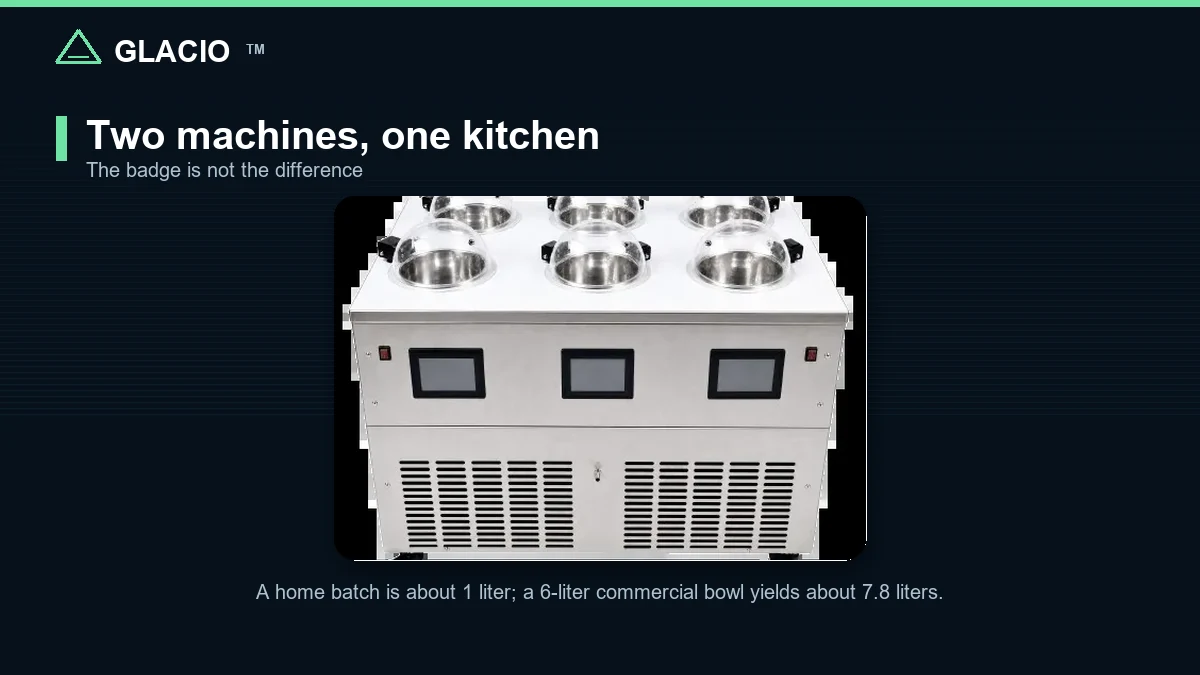
Both machines are sold as gelato makers, and the photographs look similar. The difference that matters is not the badge on the front. It is what happens when you need a second flavor on the same afternoon: the home machine needs its bowl refrozen, and the commercial machine starts the next batch.
This guide is for home bakers who are deciding how far to go, and for small producers working out whether their side project has outgrown the kitchen counter. If you already know you are buying commercial, the commercial gelato machine buying guide is the more direct read.
Three machines get called a home gelato machine
| Type | How it freezes | Batch size | Typical price |
|---|---|---|---|
| Pre-frozen bowl machine | You freeze the bowl for 12 to 24 hours, then churn | 1 to 1.5 L | $60 – $300 |
| Home compressor machine | Built-in compressor, no pre-freezing | 1 to 2 L | $250 – $900 |
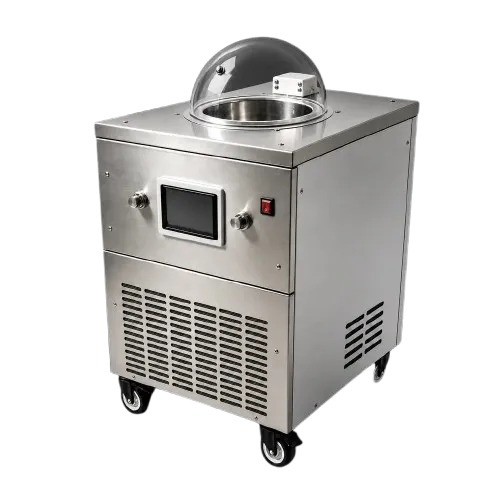
| Small commercial countertop unit | Compressor with one or two 6 L bowls and display domes | 6 L bowl, about 7.8 L finished | $1,200 – $3,000 |
The first two are kitchen appliances. The third is a piece of shop equipment that happens to fit on a counter, and it is the one that keeps working when a batch fails and you need to make another.
Capacity, in scoops rather than liters
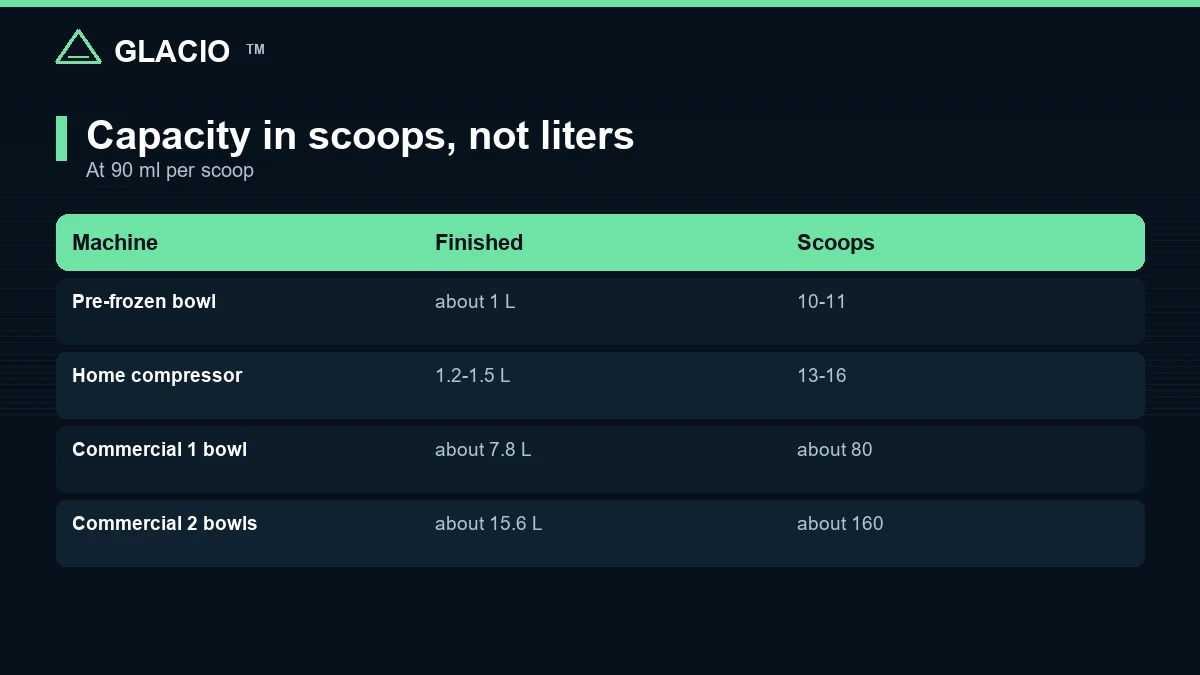
Liters are hard to picture. Scoops are not.
| Machine | Finished gelato per batch | Scoops at 90 ml | Batches per afternoon |
|---|---|---|---|
| Pre-frozen bowl | about 1 L | 10 to 11 | 1, then the bowl refreezes |
| Home compressor | about 1.2 to 1.5 L | 13 to 16 | 2 to 3 with cooling between |
| Commercial 1 bowl | about 7.8 L | about 80 | 3 per hour, back to back |
| Commercial 2 bowls | about 15.6 L | about 160 | 2 flavors at once, refilled continuously |
A family eating two scoops each finishes about 8 scoops in an evening, which is most of a home batch. That is the honest picture: home machines are sized for one sitting, not for a weekend of guests.
Overrun: why home gelato tastes different
Home machines whip more air into the mix, often 50 percent or more, because their dashers and bowls are designed for ice cream rather than gelato. Gelato is normally served at 25 to 35 percent overrun, which is why it feels denser and tastes colder on the palate.
You can move a home machine closer to gelato by chilling the mix to 4 C before churning, using a slightly higher fat and lower sugar recipe, and stopping the churn earlier than the machine’s automatic program suggests. You cannot change the geometry of the bowl, which is why the texture never quite matches a commercial draw.
Power, noise and kitchen reality
| Machine | Typical draw | Power supply | Noise and heat |
|---|---|---|---|
| Pre-frozen bowl | under 100 W | Normal socket | Quiet, no added heat |
| Home compressor | 150 to 350 W | Normal socket | Noticeable hum, warms the room slightly |
| Commercial countertop | 1.1 to 2.2 kW | Dedicated 220-240 V circuit, 16 A typical | Real heat output, needs 10 to 15 cm clearance |
That last row is the one that surprises home users. A commercial countertop machine is not a countertop appliance in the kitchen sense. It needs its own circuit, airflow at the back, and a room that does not sit at 35 C in summer, or it will not hold temperature.
Cleaning and food safety
Home machines are usually rinsed and dried in a sink. Commercial machines have removable dashers, seals and draw spouts that have to be cleaned and sanitised on a schedule, because the same machine runs several recipes a day and product sits in contact with the metal between batches. If you plan to sell anything, most food authorities expect commercial-grade equipment and a documented cleaning routine, not a home appliance in a domestic kitchen.
When a home machine is the right answer
- You are learning. Recipe testing, sugar balance and flavor work are cheaper to learn on a 1.5 L machine.
- You cook for a household. Two to eight servings at a time, a few times a week.
- You are testing a product idea. A home machine tells you whether people like the recipe before you spend on equipment.
- You have no dedicated power. A kitchen socket is enough, and no electrical work is needed.
When to step up to a commercial unit
- You sell, or you want to. Markets, cafes, pop-ups and wholesale all need volume and consistency.
- You need more than two flavors a day. Pre-freezing bowls becomes the bottleneck, not the recipe.
- You are making more than about 40 scoops a day. That is three home batches with cooling time between them.
- You need the product visible. Display domes sell gelato; a covered bowl in a kitchen does not.
- You are tired of planning a day ahead. A compressor machine makes gelato when you decide to, not when the bowl is ready.
The realistic upgrade path
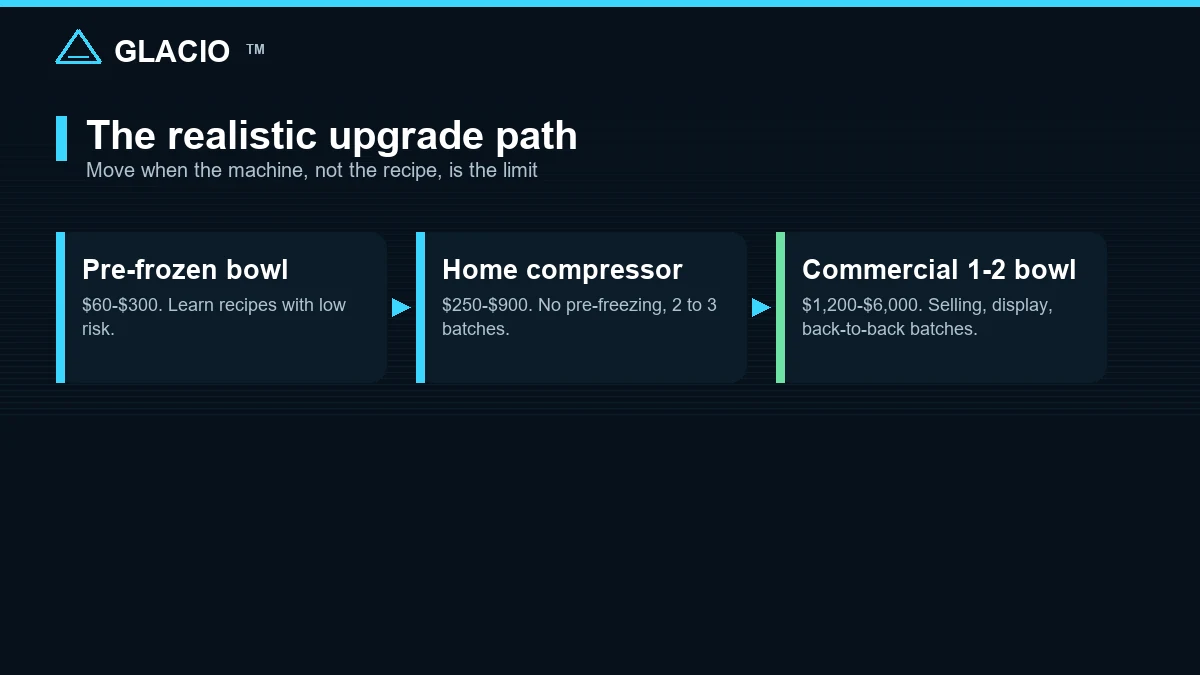
| Stage | Machine | What it unlocks | When to move on |
|---|---|---|---|
| 1 | Pre-frozen bowl, $60 – $300 | Learning recipes with low risk | When pre-freezing the bowl becomes annoying |
| 2 | Home compressor, $250 – $900 | Spontaneous batches, two flavors a day | When you start selling or run out of freezer space |
| 3 | Commercial 1 to 2 bowl, $1,200 – $6,000 | Selling, display, back-to-back batches | When you need more than six flavors on display |
| 4 | Commercial 4 to 6 bowl, $5,000 – $18,000 | Full shop menu, wholesale top-ups | Only when the sales justify the floor space |
Stage 3 is where most small producers stop, and the countertop machines in the GLACIO GB-Series sit exactly there: one to six 6-liter bowls, display domes, and a footprint that fits a cafe, bakery or market counter rather than a factory floor.
Frequently asked questions
What is the best gelato machine for home use?
For occasional batches, a pre-frozen bowl machine at $60 to $300 is enough. If you make gelato weekly or want two batches in an afternoon, a home compressor machine at $250 to $900 removes the pre-freezing step and is the better long-term buy. Move to a commercial countertop unit only when you sell or need more than about 40 scoops a day.
How much gelato does a home machine make?
Roughly 1 to 1.5 liters of finished gelato per batch, which is about 10 to 16 scoops at 90 ml. Because home machines run higher overrun, the volume looks larger than the weight suggests.
Can I use a home gelato machine to start a business?
For testing recipes, yes. For selling, no. Home machines cannot produce enough per hour, are not built for continuous daily cycles, and in most places commercial food businesses are expected to use commercial-grade equipment with a documented cleaning routine.
How long does a home gelato machine take?
A pre-frozen bowl machine churns in 20 to 40 minutes after 12 to 24 hours of bowl freezing. A home compressor machine takes 30 to 60 minutes per batch and needs a cooling interval between batches. A commercial countertop machine freezes a 6-liter bowl in 15 to 20 minutes and can start the next batch immediately.
Is homemade gelato cheaper than buying it?
Per liter, yes, once you ignore the machine cost. Ingredients for a basic milk-based gelato typically run a fraction of retail price per liter. The economics change if you count your time, which is the real reason to move to a commercial machine when volume grows.
Not sure which stage you are at
Tell us how many scoops you make in a week, whether you sell any of it, and what power you have available. We will tell you honestly whether a home machine is still the right tool or whether it is time for a countertop commercial unit.
Tell us the shop. We size the machine and price it.
Two numbers decide the model: how much you sell on a busy day, and how much you need in your busiest hour. Send those with your voltage and you get a model recommendation and an FOB quote within 24 hours.
- ✓ Sized to your peak hour
- ✓ FOB quote and lead time
- ✓ No obligation
Some information may be outdated
Comments
Questions about equipment capacity, voltage, or recipes? Leave a comment.
Loading comments...