

Used Commercial Ice Cream Machine: Prices, Sources and Risks
Short answer: a used commercial ice cream machine usually sells for 30 to 50 percent of its new price, and that range is wide on purpose. A two-year-old machine from a working shop with service records is worth the top of it. A ten-year-old machine with an obsolete refrigerant and no spare blades is worth its weight in parts, whatever the listing says. Before you offer, price three things on top of the machine: a new gasket and seal set, one set of scraper blades, and a refrigerant check. If the seller cannot document the service history, deduct 20 percent for what you cannot see.
Used equipment is how a lot of small shops open on a real budget, and it is also how a lot of them lose a season. The difference is rarely the machine itself. It is whether the buyer checked the refrigerant, the parts supply and the electrical compatibility before the machine was lifted onto the counter.
This guide covers the buying decision: what used machines are worth, where they come from, what you can and cannot verify, and how to structure an offer. The hands-on checks belong to the used commercial ice cream machine inspection checklist, which walks through a full cycle test.
What a used machine is worth by age
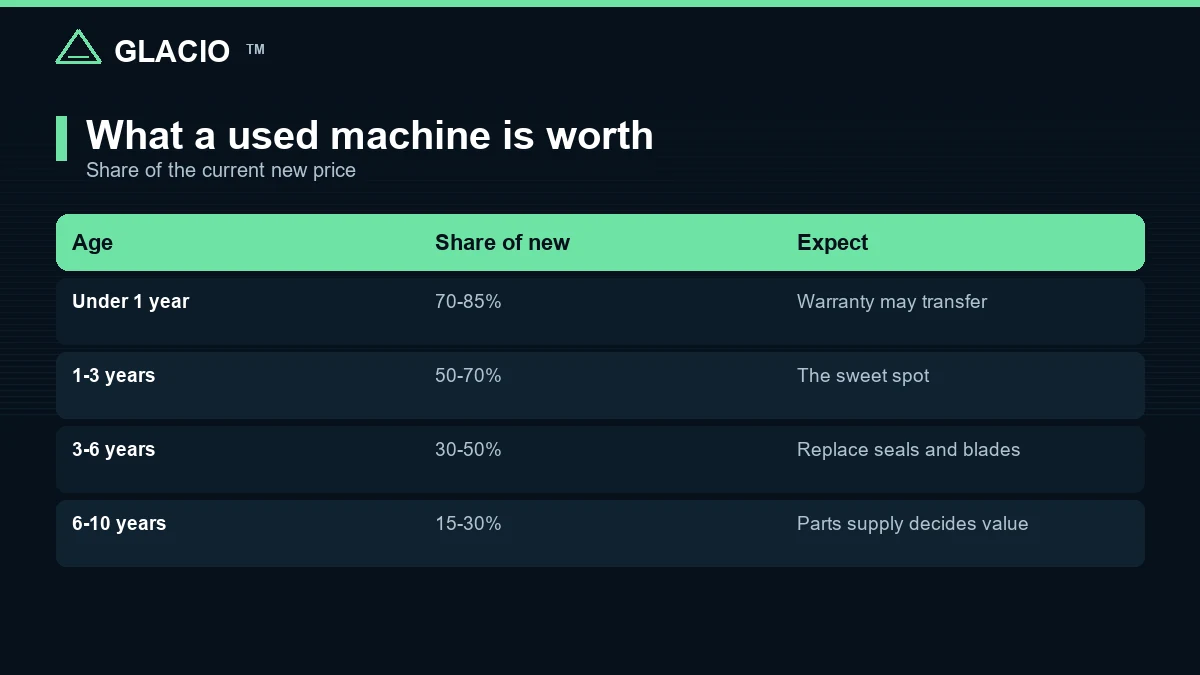
These percentages are of the current new price for a comparable machine, and they assume the machine runs, holds temperature and has a clean bowl.
| Age | Typical share of new price | What buyers should expect |
|---|---|---|
| Under 1 year | 70 to 85 percent | Often a cancelled order or a failed venture. Warranty may still transfer. |
| 1 to 3 years | 50 to 70 percent | The sweet spot. Compressor is mature, parts are current. |
| 3 to 6 years | 30 to 50 percent | Expect to replace seals and blades immediately. |
| 6 to 10 years | 15 to 30 percent | Refrigerant and board availability decide the real value. |
| Over 10 years | Scrap plus parts value | Only worth buying if you already own one and need spares. |
Two adjustments move the number more than age does. A machine from a working shop that kept service records is worth 10 to 15 percent more than the same model from a storage unit, and a model whose manufacturer no longer supplies blades or boards is worth 30 to 50 percent less, because you are buying a machine with a known end date.
Where used machines come from
| Source | Typical condition | What to watch |
|---|---|---|
| Shop closure | Well used, complete | Often sold quickly, sometimes without service records or with outstanding finance. |
| Shop upgrade | Good, maintained | The best source. Ask why they are selling and what they replaced it with. |
| Lease or rental return | Variable | Check for damage from transport and for missing accessories. |
| Dealer refurbished | Cleaned, sometimes repaired | Highest price of the used channels, but you get a short warranty and a tested unit. |
| Online marketplace | Unknown | Photos rarely show the compressor, refrigerant label or the inside of the bowl. |
| Auction or liquidation | Unknown, sold as seen | No test run, no comeback, and you arrange transport. |
The three risks that decide a used purchase
1. Refrigerant
Ask for the refrigerant on the machine’s data plate, not from the seller’s memory. Older equipment may run a refrigerant that is being phased down or that is simply unavailable in your country, which turns a routine recharge into a redesign. Confirm with a local refrigeration engineer that the refrigerant can be supplied and serviced where you operate before you buy.
2. Spare parts
Scraper blades, seals, dashers and control boards fail in that order. On a current model they are stock items. On a discontinued model they are a search. Before you buy, price the three wear parts and ask for a delivery date. If any of them cannot be sourced, the machine’s value drops sharply even if it freezes perfectly today.
3. Electrical compatibility
Machines move between countries more often than buyers expect. A three-phase 380 V machine cannot be used in a shop with single-phase supply without a converter or a different machine, and both are expensive. Check the data plate against your building supply, and have an electrician confirm the startup current before you schedule delivery.
Weight is the fourth, quieter risk. Machines in this category run from about 90 kg for a single-bowl countertop unit to over 300 kg for a six-bowl floor model. Stairs, lifts, door widths and floor loading all become part of the purchase, and a machine that cannot reach the counter is not a bargain.
How to structure an offer
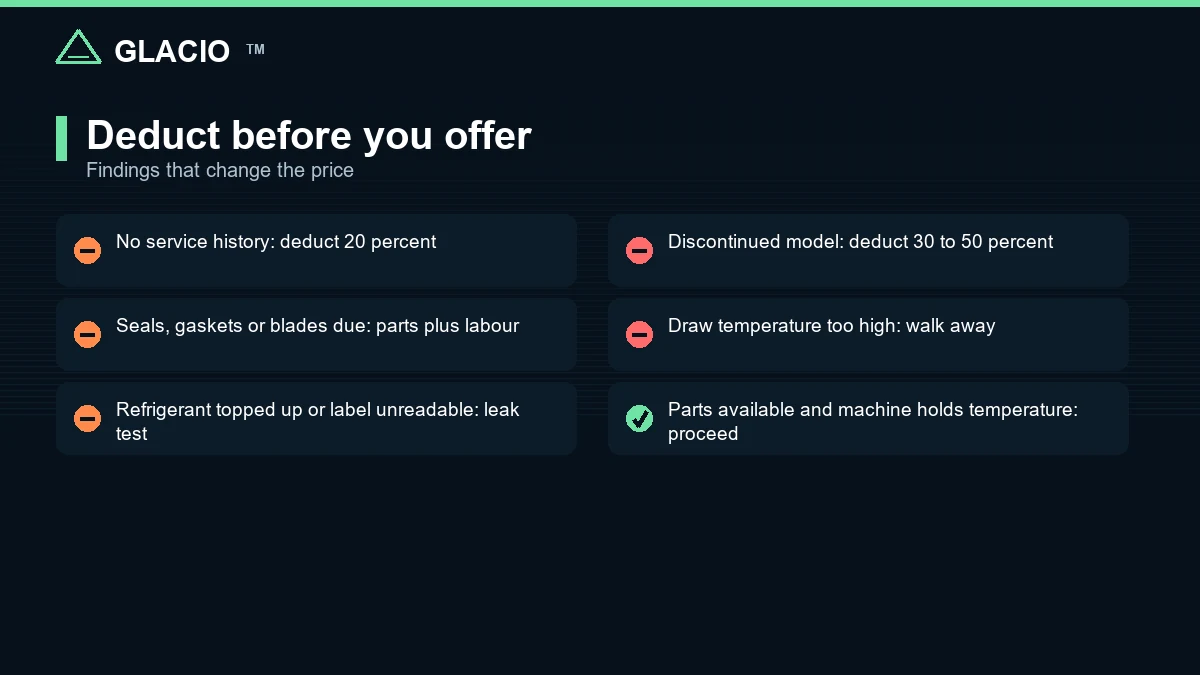
Start from the age-based band, then adjust line by line. This is the deduction schedule we use when advising shops on a used machine.
| Finding | Typical deduction |
|---|---|
| No service history, seller cannot say how it was used | 20 percent |
| Seals, gaskets or blades due for replacement | Cost of the parts plus an hour of labour |
| Refrigerant needs topping up, or the label is unreadable | Cost of a leak test and a recharge |
| Discontinued model with no parts supply | 30 to 50 percent |
| Draw temperature above the target after a full cycle | Walk away, or price a compressor repair |
| Cosmetic damage to the bowl, dome or panels | Replacement part cost, if it is still available |
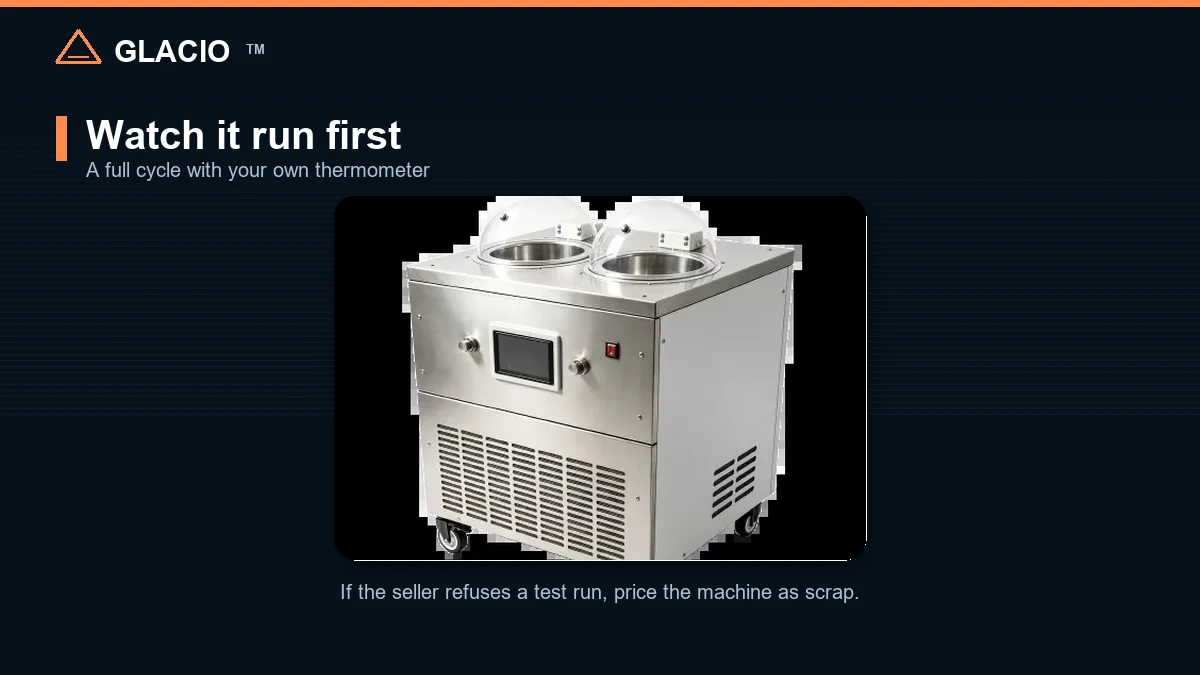
Pay on collection or after a successful test run, never in full from a photograph. If the seller refuses a test run with your own thermometer and timer, treat the machine as scrap and price it that way.
When new is the cheaper decision
Used wins when the machine is 1 to 5 years old, the model is current, and you can inspect it running. New wins in three situations:
- You are opening within six weeks. A used machine that needs a compressor repair does not fit a fixed opening date.
- You need a specific voltage or bowl count. Waiting for the exact used configuration can take months longer than ordering one built for you.
- You are relying on uptime. A shop with one machine and no backup cannot absorb an unplanned failure in peak season.
Leasing and financing sit between the two and are worth pricing before you commit either way; the comparison of financing versus leasing versus buying outright works through the cash-flow side.
Frequently asked questions
How much should I pay for a used commercial ice cream machine?
Between 30 and 50 percent of the new price for a machine that runs and holds temperature, with the top of that range for units under three years old with service records. Adjust down for missing parts supplies, an unavailable refrigerant, or missing seals and blades, and walk away if the machine cannot hold the draw temperature through a full cycle.
Is a used ice cream machine worth buying?
Yes if the model is current, the refrigerant is serviceable locally, the wear parts are available, and you can watch a full freezing cycle before paying. It becomes a bad purchase when any of those four cannot be confirmed, because the repair cost then lands on you after the money has changed hands.
What should I check first on a used machine?
The data plate: model, voltage, phase and refrigerant. Then run a full cycle and measure the draw temperature with your own probe. After that, inspect the bowl surface, the scraper blades, the seals and the condenser for corrosion, and ask for the price and lead time of a blade and seal set.
Can I convert a three-phase machine to single phase?
Sometimes, with a different motor and control configuration, and the cost is usually high enough that buying the correct machine is cheaper. If your building only has single phase, buy a single-phase model rather than planning a conversion.
Do used machines come with a warranty?
Private sales almost never do. Refurbished machines from a dealer usually carry 3 to 12 months on parts, sometimes including labour. Get the warranty in writing with the parts it covers, because “guaranteed working” verbally means nothing on the day the compressor stops.
Before you commit
Send us the model, age, photos of the data plate and the asking price, and we will tell you whether the number is in range, which parts to price before you buy, and what a new equivalent would cost for comparison.
Tell us the shop. We size the machine and price it.
Two numbers decide the model: how much you sell on a busy day, and how much you need in your busiest hour. Send those with your voltage and you get a model recommendation and an FOB quote within 24 hours.
- ✓ Sized to your peak hour
- ✓ FOB quote and lead time
- ✓ No obligation
Some information may be outdated
Comments
Questions about equipment capacity, voltage, or recipes? Leave a comment.
Loading comments...