




Short answer: for most small shops the machine itself is US$3,000–15,000, but the number to save is the first-year cash requirement — machine, installation, first stock and a buffer. Plan on US$6,000–35,000 depending on scale, or finance the machine and keep 20–30% of the total in cash.
This guide covers what to save, how much, and which financing route fits which buyer.
What you are actually saving for
The machine is rarely the whole bill. A realistic first-year budget has four parts:
| Item | Typical range | Notes |
|---|---|---|
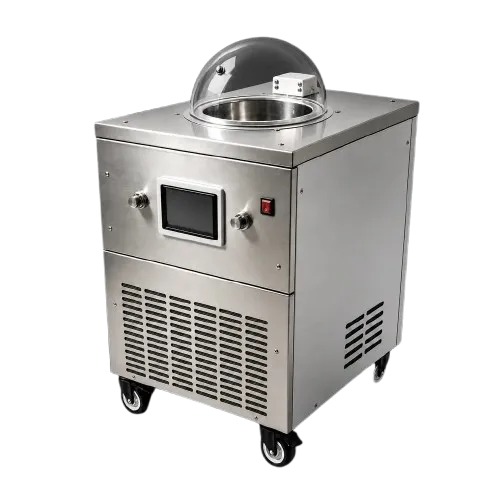
| Machine | $3,000–15,000 | Single-bowl countertop to twin-bowl floor model |
| Installation and electrical | $300–2,500 | Dedicated circuit, drainage, ventilation, commissioning |
| First stock and packaging | $500–2,000 | Mix or ingredients, tubs, lids, labels, spoons |
| Working capital buffer | 2–3 months of fixed costs | Rent, labor, utilities while volume ramps |
That is why a “cheap” US$3,000 machine can still need US$8,000+ of cash to open.
Three scale scenarios
| Scenario | Machine | Total first-year cash | Daily output |
|---|---|---|---|
| Café adding gelato | Countertop single bowl | $6,000–10,000 | 20–40 L/day |
| Small gelato shop | One floor model, 2 bowls | $12,000–20,000 | 40–80 L/day |
| Busy shop or small producer | Twin or multi-bowl | $22,000–35,000 | 80–200 L/day |
These are planning ranges, not quotes — the machine price depends on capacity, voltage, refrigerant and customization. The cost guide breaks the machine side down, and the equipment budget guide covers phase-one buying order.
How much to save before you buy
A simple rule that works:
1. Pay 20–30% down. It lowers the financed amount and improves approval odds. 2. Keep 3 months of fixed costs in reserve. The first 90 days are the slowest; most closures happen here. 3. Do not finance consumables. Stock and packaging should come from cash, not credit.
If you are saving rather than financing, divide the total by the months you can wait. Twelve months at US$12,000 total means US$1,000 a month plus a buffer.
| Saving horizon | Monthly amount for a $12,000 plan |
|---|---|
| 12 months | ~$1,000 |
| 18 months | ~$670 |
| 24 months | ~$500 |
Financing options, compared
| Route | Best for | Watch out for |
|---|---|---|
| Equipment loan (bank or credit union) | Established shops with 2+ years of accounts | Personal guarantee, collateral, 3–7 year terms |
| Equipment finance / lease-to-own | New shops that want fixed payments | Total cost of ownership is higher; check the buyout |
| Supplier / in-house terms | Buyers with a deposit and a clear delivery date | Short terms, late fees, unclear warranty terms |
| 0% promotional credit cards | Small machines, short payoff | Deferred interest clauses; a missed payment can backdate interest |
| Microloans and small-business programs | Very small shops, first-time owners | Paperwork, slower approval, limited amounts |
The financing and lease-vs-buy guide compares the maths; the ROI and payback guide shows how to test whether a payment is affordable at your volume.
The payment test: scoops per day
Lenders look at debt service coverage; you should look at scoops.
Take a machine payment of US$350 a month. At a US$4 gross margin per scoop, that is about 3 scoops a day to cover the payment — before labor, rent and everything else. If your location cannot do 30–50 scoops a day in the first quarter, the payment is not the problem; the demand is.
Run the number for your own concept before signing: daily scoops × margin × 30 vs total monthly fixed costs. If the gap is thin, buy smaller or wait.
What lenders actually ask for
- Business plan with volume assumptions, not just a menu
- Machine quote or proforma invoice with model, voltage and lead time
- Two years of accounts (or projections for a start-up)
- Personal credit and a guarantee
- Proof of deposits or pre-orders where available
A complete document set also helps you negotiate: the shipping and import documents guide lists what a factory should provide.
Five mistakes that cost money
1. Financing the whole project. Borrow for the asset, fund the working capital yourself. 2. Ignoring electrical work. A machine that needs a new circuit and ventilation can add thousands. 3. No buffer. The first quarter is slow; without reserve you sell the machine at a loss. 4. Choosing the cheapest lease. Longer terms and deferred payments hide a higher total cost. 5. Buying capacity you cannot fill. A twin-bowl machine idling at 20% output costs more per litre than a smaller one running full.
FAQ
How much should I save before buying an ice cream machine?
For a small shop, aim for 20–30% down plus three months of fixed costs. On a US$15,000 machine that is roughly US$10,000–12,000 of cash, including installation and first stock.
Can I finance a commercial ice cream machine?
Yes. Equipment loans, lease-to-own, supplier terms and small-business programs are all common. Expect a personal guarantee for a new business, and compare total cost, not just the monthly payment.
Is it better to lease or buy?
Lease if you want fixed payments and predictable upgrades; buy if you keep equipment for years and want the residual value. The break-even usually depends on how long you keep the machine and your tax position.
How long does approval take?
Bank loans and microloans can take weeks; equipment finance and supplier terms are often faster once the invoice and deposit are ready.
Next step
If you are building a savings or financing plan, tell us your target daily volume and country — an export engineer replies within 24 hours with a machine quote you can take to a lender. Request a quote.
Sources: GLACIO factory pricing bands; general small-business lending practice. Ranges are planning estimates, not offers — confirm rates, terms and eligibility with your lender.
Some information may be outdated
Related reading
Comments
Questions about equipment capacity, voltage, or recipes? Leave a comment.
Loading comments...