

How to Choose Ice Cream Flavours Without Overbuying
Short answer: The practical way to answer how to choose ice cream flavours for a new shop is to start with 8 to 12 flavours built from a small set of shared bases. Give each base two or three variations, add a fruit or sorbet line, and reserve only a few menu slots for rotation. This keeps 6-litre batches efficient, reduces ingredient waste, and avoids forcing one machine to behave like a full production plant.
A new menu often grows in the wrong direction. Every friend, supplier, and social media comment suggests another flavour, so the opening list reaches 20 or 24 items before the first customer arrives. The result is predictable: short-dated purees in the fridge, half-used bags of inclusions, long changeovers, and staff who know twelve recipes badly instead of eight recipes well.
This guide is for bakery owners, cafe operators, bubble tea shops, gelato founders, and home bakers moving into a small commercial space. It focuses on the menu architecture that makes production manageable. The flavours matter, of course. The system behind them decides whether the machine earns its keep.
Why a Starting Menu of 8 to 12 Flavours Often Wins
An 8 to 12 flavour menu is large enough to feel complete and small enough to run repeatedly. You can offer familiar choices, one or two dairy-free options, and a changing seasonal line without turning every production day into a scavenger hunt for ingredients.
Overbuying rarely happens because one flavour is expensive. It happens because 20 flavours each need their own paste, fruit, chocolate, nut, label, storage position, and cleaning plan. The opening order looks modest line by line, but the total inventory can sit unused for weeks.
- Six to eight core flavours create consistency and repeat orders.
- Two to four rotating flavours let you use seasonal fruit and test demand.
- One or two dairy-free options cover more guests without doubling every inclusion.
- One shared allergen note is easier to train than a separate rule for every flavour.
The operational benefit is straightforward. If ten flavours share four bases, staff can produce the same base, cool it consistently, and split it into different finishing paths. That gives you variety without multiplying every step.
How to Choose Ice Cream Flavours for a New Shop Menu
Start with production families, not a random list of attractive flavour names. A flavour is easy to sell if it fits an existing base, uses an inclusion you already stock, and can be finished without changing the whole production schedule.
Compare base families before choosing individual flavours
| Base family | Best use | Typical inclusions | Production risk |
|---|---|---|---|
| Neutral dairy | Vanilla, coffee, caramel and cookies | Extracts, sauces, biscuits | Low if inclusions are added late |
| Chocolate dairy | Chocolate, mocha, mint and orange | Cocoa, chips, praline | Medium if cocoa changes mix viscosity |
| Nut dairy | Pistachio, hazelnut and almond | Pastes, praline, roasted nuts | High if paste is dense or oily |
| Fruit dairy | Strawberry, peach and berry | Purees, pieces, ribbons | Medium if fruit is watery or high in sugar |
| Sorbet | Mango, lemon, raspberry and coconut | Puree, juice, fruit pieces | High if sugar balance is inconsistent |
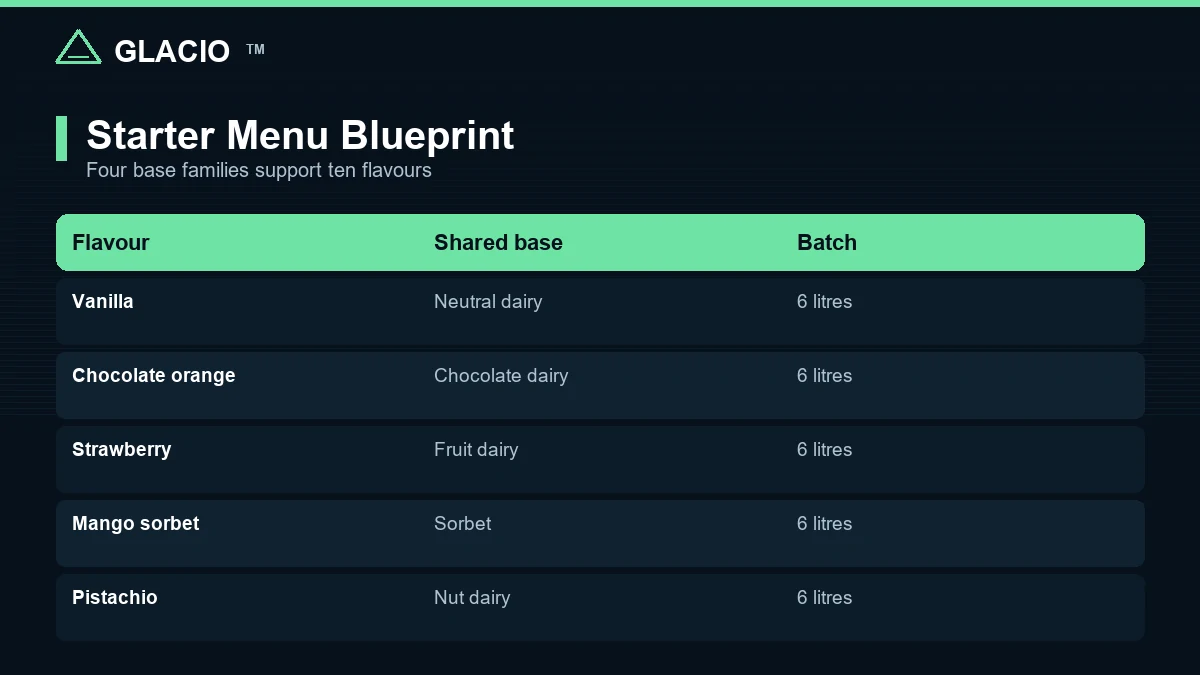
Now build the opening list against those families. The table below is a workable ten-flavour starting point for a small shop using a 6-litre bowl. Replace flavours with local favourites, but keep the shared-base logic.
| Flavour | Base | Inclusion or finish | Batch size |
|---|---|---|---|
| Vanilla bean | Neutral dairy | Vanilla extract and seed | 6 litres |
| Chocolate | Chocolate dairy | Cocoa and dark chocolate | 6 litres |
| Strawberry | Fruit dairy | Strawberry puree and pieces | 6 litres |
| Coffee | Neutral dairy | Espresso paste or brewed concentrate | 6 litres |
| Pistachio | Nut dairy | Pistachio paste and praline | 6 litres |
| Cookies and cream | Neutral dairy | Cookie pieces added near the end | 6 litres |
| Salted caramel | Neutral dairy | Caramel ribbon and sea salt | 6 litres |
| Mango sorbet | Sorbet | Mango puree and lime | 6 litres |
| Matcha | Neutral dairy | Matcha powder and white chocolate | 6 litres |
| Chocolate orange | Chocolate dairy | Orange zest and chocolate flakes | 6 litres |
Build a Shared-Base System Before You Buy Ingredients
Shared bases are not a shortcut that lowers quality. They are a discipline that makes quality repeatable. If vanilla, coffee, caramel, and cookies and cream begin with the same carefully made neutral base, the team controls fat, sugar, solids, and mix temperature once. The flavour identity comes from clean additions and correct finishing.
Keep the base mix at 2-4 degrees C before loading. A warm mix takes longer to draw, puts extra load on the machine, and gives you a softer product at the end of the cycle. The same base held properly gives staff a predictable starting point every morning.
- Choose three dairy bases and one sorbet base for the opening menu.
- Assign two or three flavours to each base instead of creating a new recipe for every name.
- Standardise inclusions by supplier, format, and storage location so staff grab the right item without guessing.
- Keep two flavours neutral enough to pair with cake, waffles, bubble tea, or retail tubs.
- Document which inclusions can be swapped without changing the base or the machine cycle.
The equipment plan should follow the same logic. This gelato shop equipment checklist is useful when deciding what belongs in the opening package and what can wait.
Match Menu Size and Batch Size to the Machine
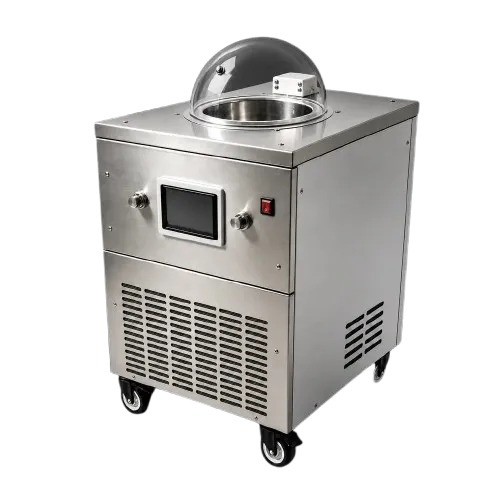
A menu is only realistic if the machine can produce it on the days customers buy it. The GLACIO GB-Series uses 6-litre bowls, with one to six bowls depending on the model. Typical cycle time is 15-20 minutes per bowl, and typical output is roughly 14 litres per hour per bowl. Draw temperature, cycle time, and output depend on mix, starting temperature, ambient conditions, and the operating cycle.
| Model | Bowls | Approximate weight | Practical menu role |
|---|---|---|---|
| GB-1 | 1 bowl | About 96 kg | Very small shops testing a focused menu |
| GB-2 | 2 bowls | About 140 kg | Small cafes and bakeries with two production streams |
| GB-4 | 4 bowls | About 230 kg | Busy shops keeping several core flavours ready |
| GB-6 | 6 bowls | About 330 kg | Higher-volume counters with a wider display |
With a one-bowl machine, every extra flavour competes for the same production window. Ten active flavours may be fine on a quiet Tuesday and painful during a summer weekend. Two bowls create breathing room, and four or six bowls let you separate dairy, sorbet, allergens, and fast-moving cores.
Use batch freezer sizing by daily sales to connect menu length with real service demand. Do not choose bowls only by display space. Choose them by how many distinct batches you must finish before the rush.
Which Ice Cream Flavours Slow Down a Batch Freezer
Some flavours take longer to draw, resist hardening, or make cleaning harder. They can still earn a place on the menu. Put them on the watchlist, produce them in a planned slot, and avoid treating them like vanilla.
- Spirit-forward flavours: adding spirits to a 6-litre batch before freezing lowers the freezing point, so the mix may draw soft and need more time.
- High-sugar syrups and honey: these can keep the mix soft at the end of the cycle and create a sticky cleanup around the door and dasher.
- Dense nut pastes: thick pistachio or hazelnut paste can coat the barrel, slow incorporation, and make the batch harder to extract.
- Large hard inclusions: whole nuts, thick brownie cubes, and brittle pieces can bridge the outlet or slow discharge if they are added too early.
- Heavy allergen changeovers: a dairy-free or nut-based line after a plain batch adds cleaning time even when the freezing cycle is normal.
How to keep difficult flavours from disrupting service
- Run difficult batches before the rush, not between two orders when the counter is already under pressure.
- Add alcohol, ribbons, and large pieces late in the cycle so the base freezes first.
- Keep the difficult flavour next to a shared-base flavour in the production plan so one base preparation serves both.
- Schedule allergen and dairy-free production in blocks, then complete the proper cleaning step once.
- Test the draw, hardness, and scoopability twice before adding the flavour to the permanent list.
Follow a documented daily sanitising protocol after sticky inclusions or allergen changeovers. An extra ten minutes of cleaning is cheaper than a cross-contact problem or a detectable flavour carryover.
How to Rotate Seasonal Flavours Without Overbuying
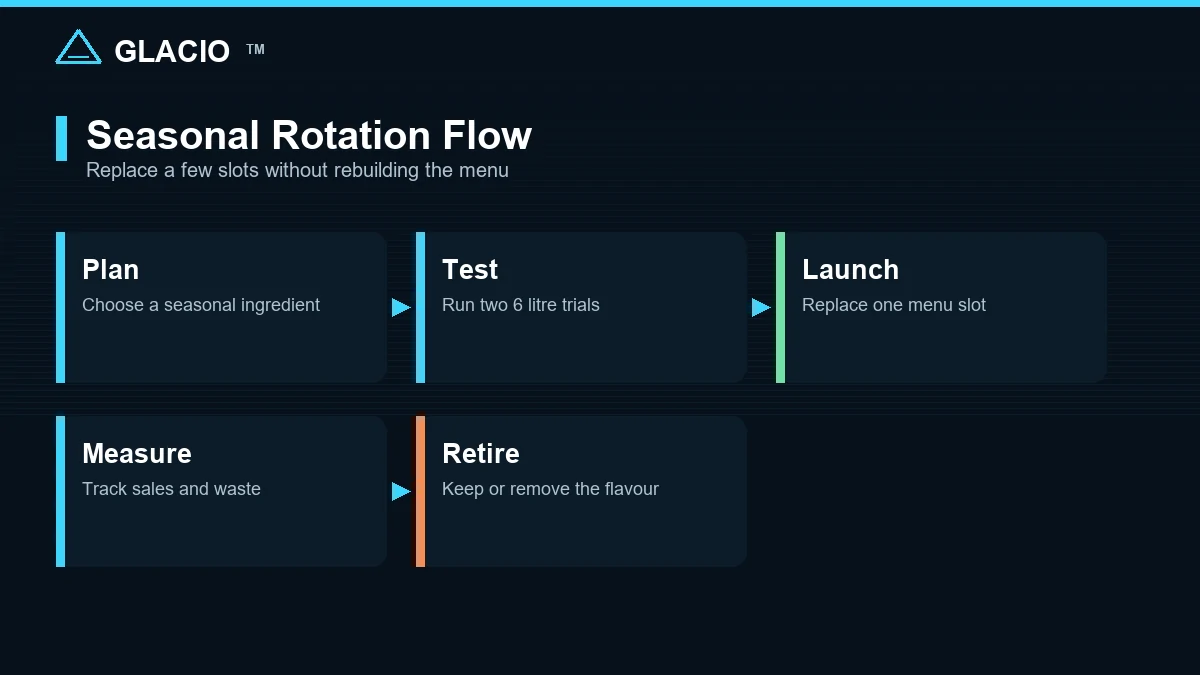
Seasonal rotation works when it replaces a menu slot rather than expanding the menu. Keep the core list stable, then change a small number of flavours as fruit, holidays, and local demand shift. Staff learn the new item without forgetting the old system.
| Season | Rotation examples | Shared base | Planning move |
|---|---|---|---|
| Spring | Rhubarb, strawberry, lemon | Fruit dairy or sorbet | Buy small fruit lots and test sweetness |
| Summer | Mango, peach, raspberry, coconut | Sorbet and fruit dairy | Protect freezer space for fast sellers |
| Autumn | Apple, cinnamon, pumpkin, praline | Neutral dairy and nut dairy | Use spices and pastes that store well |
| Winter | Chocolate orange, peppermint, caramel | Chocolate dairy and neutral dairy | Pair richer flavours with cakes and drinks |
- Replace only a few flavours at a time so regular customers still find their favourites.
- Reuse one inclusion in multiple flavours, such as caramel in coffee, chocolate, and apple menus.
- Buy seasonal ingredients in tested quantities, then reorder after the flavour proves itself.
- Retire a flavour when sales do not justify its storage, prep, or cleaning burden.
If you want more variety, build stronger pairings before you add more flavours. A shared base can support a core scoop, a sundae, a milkshake, and a bubble tea topping. That creates menu depth without creating another 6-litre production run.

Test the Flavour List Before Opening Day
An opening menu should be tested under service conditions, not only in a calm practice session. Run each base at least twice, then test the inclusions that change texture, draw time, or cleanup. You are looking for repeatability, not a perfect first batch.
- Test every core base with the normal mix temperature and production routine.
- Run each inclusion at the point staff will actually add it during service.
- Hold finished tubs under normal display conditions and check scoopability through the day.
- Simulate a busy period with two popular flavours, one sorbet, and one difficult flavour in the same shift.
- Ask staff to produce the menu from the written recipe without verbal coaching.
Record draw time, batch yield, waste, cleanup notes, and customer feedback in one place. A flavour that sells well but doubles cleaning time may still be a poor opening choice. A modest flavour that sells steadily, uses a shared base, and scoops cleanly may deserve a permanent slot.
The gelato versus hard ice cream equipment guide can help you set the right base and serving expectations before the test menu becomes a permanent menu.
Keep the Menu Profitable After Launch
Opening day is the start of menu editing. Review what sold, what was thrown away, and which flavours created the most production friction. Your menu should earn its place in the freezer, not merely look impressive on a chalkboard.
- Track batch yield against tubs sold so shrink is visible.
- Compare flavours by repeat orders, not only first-week novelty.
- Move slow but useful flavours into sundaes, shakes, or baked pairings before removing them.
- Replace weak flavours with seasonal options that use an existing base and inclusion.
- Keep recipes and cleaning notes current so the menu can survive staff changes.
This is also where menu discipline protects cash flow. Ten well-designed flavours can support a strong display, a smaller ingredient list, and fewer production mistakes. More flavours do not automatically create more sales, but they almost always create more inventory.
Frequently asked questions
How many flavours should a new ice cream shop start with?
Start with 8 to 12 flavours. Use six to eight core flavours for consistency and reserve a few positions for seasonal or test flavours. That range gives customers enough choice without forcing a small machine and a new team to manage too many bases, inclusions, and cleaning changes.
What are the best first flavours for an ice cream shop?
Vanilla, chocolate, strawberry, coffee, cookies and cream, salted caramel, and one fruit sorbet are sensible starting points. Pistachio or matcha can work when you have tested the paste, batch behaviour, and supplier cost. The strongest opening list uses flavours that share bases and appeal to different customer groups.
How can one machine produce many flavours without long delays?
Use shared bases and schedule flavours by production family. A machine can run one 6-litre bowl at a time, so a menu with ten unrelated recipes creates more waiting than a menu with ten flavours built from four bases. Group neutral dairy, chocolate dairy, nut dairy, and sorbet production so changeovers happen once.
Which ice cream flavours are hardest on a batch freezer?
Alcohol, high-sugar syrups, dense nut pastes, large hard inclusions, and allergen-heavy flavours create the most production friction. They may draw soft, mix unevenly, block discharge, or require extra cleaning. Test them in a planned slot and add sensitive inclusions late in the cycle.
Should I use the same menu for gelato and hard ice cream?
You can share flavour ideas, inclusions, and seasonal themes, but the bases should match the product you are selling. Gelato and hard ice cream differ in fat, air, texture, and serving temperature. A clean menu keeps the production method clear instead of pretending one base will behave the same in every format.
How do I rotate seasonal flavours without wasting ingredients?
Replace a small number of existing menu positions and reuse ingredients across several flavours. Buy only the quantity needed for a test batch, then reorder once demand is proven. Keep the core menu stable so seasonal additions do not expand storage, prep, and machine load at the same time.
Start With a Menu Your Machine Can Actually Produce
Build the opening menu around 8 to 12 flavours, three or four shared bases, and inclusions that serve more than one recipe. Then match the menu to the batch freezer. A one-bowl model suits a tightly controlled list, while two, four, or six bowls reduce production conflicts as demand grows. The right answer is not the longest menu. It is the menu you can make consistently, sell profitably, and rotate without buying another machine.
Send your expected daily litres, peak-hour demand, display size, and flavour list to GLACIO. Request a machine recommendation and quote and we will help you map the menu to the GB-Series model that fits your counter and production routine.
What flavour on your current list creates the most production trouble?
Tell us the shop. We size the machine and price it.
Two numbers decide the model: how much you sell on a busy day, and how much you need in your busiest hour. Send those with your voltage and you get a model recommendation and an FOB quote within 24 hours.
- ✓ Sized to your peak hour
- ✓ FOB quote and lead time
- ✓ No obligation
Some information may be outdated
Comments
Questions about equipment capacity, voltage, or recipes? Leave a comment.
Loading comments...