

Ice Cream Display Freezer: How to Choose One That Freezes and Shows
Walk around any ice cream trade show and you will hear the same phrase used for two very different machines. A display freezer in one booth is a glass-topped cabinet that holds tubs at serving temperature. In the next booth it is a front counter machine that freezes the mix, shows the finished product and keeps it ready to scoop, all in the same footprint. Both are called an ice cream display freezer. Only one of them makes ice cream.
That confusion costs buyers money. Shops order a display freezer expecting production and end up with storage, or they buy a separate batch freezer plus a display case when a single front counter unit would have covered both jobs. This guide separates the categories, gives you the numbers to compare them, and shows where a freeze-and-display machine is the cheaper answer.
Quick answer
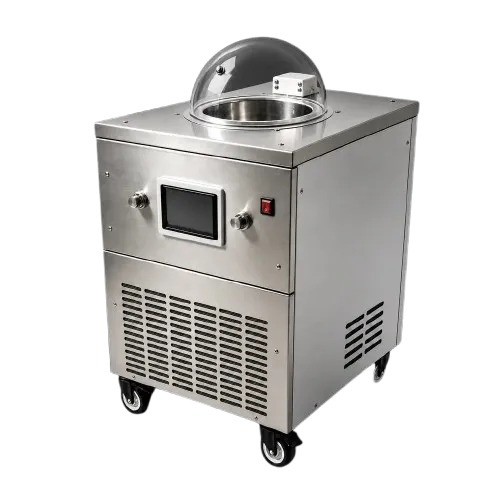
If you already make ice cream in a batch freezer and only need to show and hold it, buy a display-only freezer and check its holding temperature, glass quality and defrost cycle. If you need the counter to freeze, show and hold, buy a freeze-and-display machine, which is the front counter unit this site builds. The second option removes an entire piece of equipment from your shop, which is why it usually wins in small and mid-size spaces.
Three machines, one name
| Machine | What it does | Typical temperature | Where it goes wrong |
|---|---|---|---|
| Display-only freezer | Holds pre-made tubs or pans for serving | Minus 12 to minus 16 degrees Celsius | Bought as a production machine, then never freezes fresh mix properly |
| Freeze-and-display machine | Freezes mix in the cylinder, then holds the finished product in a visible bowl or pan set | Freezing stage to minus 6 to minus 9 degrees, holding stage minus 12 to minus 16 | Undersized compressor, so the display section warms up during a busy service |
| Display case or cabinet | Shows finished product only, usually with a curved glass front | Minus 12 to minus 18 degrees | Glass fogs or ices over, and product on the top row warms faster than the bottom |
If you are still deciding between a case and a machine display, the display case versus machine display comparison walks through the visibility trade-off, and the display case buying guide covers pan counts and holding temperatures in detail.
What to check on any display freezer
Holding temperature, not just the number on the sticker
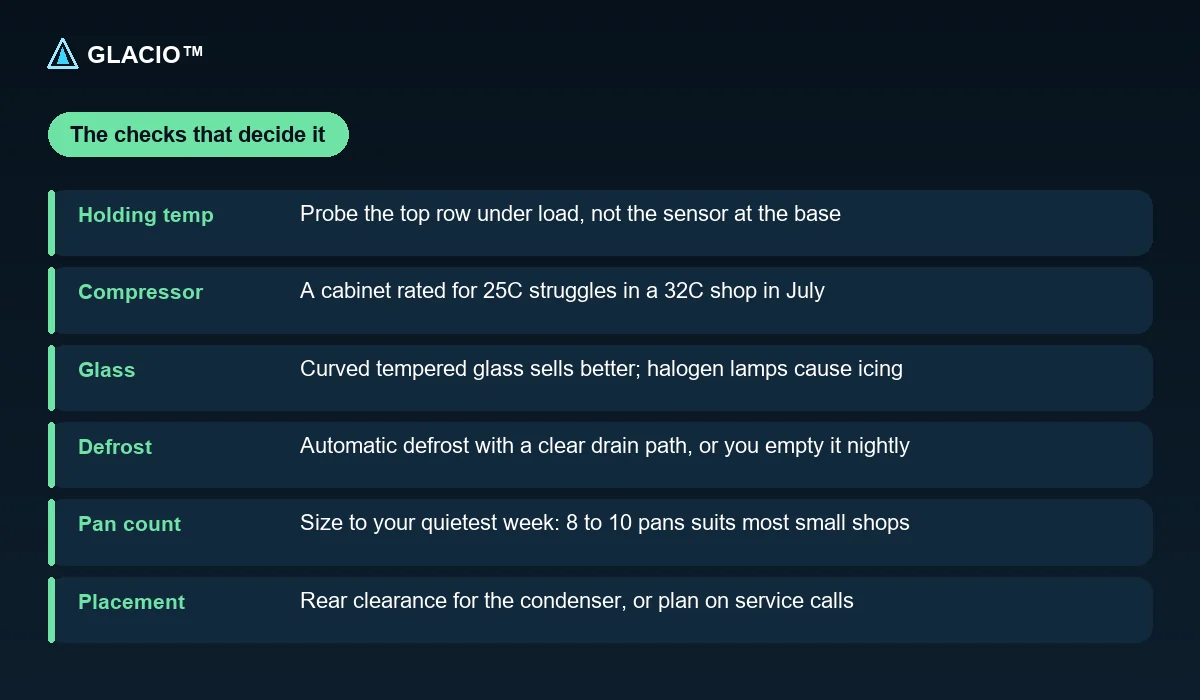
Ask for the temperature at the top row of product, not at the sensor. In a busy shop selling 40 scoops an hour, the top pans are lifted every few minutes. A cabinet that holds minus 16 degrees at the base can sit at minus 9 at the top on a warm afternoon, which is where product starts to soften and refreeze. Look for a machine that states its temperature under load, and measure it yourself with a probe thermometer before you buy.
Compressor duty in a hot room
This is where front counter machines separate from cheap cabinets. A 32 degree shop with a hot display light is the normal working condition, not the worst case. Ask what ambient temperature the unit is rated for. If the answer is 25 degrees, expect the compressor to run continuously in July, which shortens its life and stretches recovery time. In small shops the heat load also matters: the machine competes with your air conditioning, and the heat and noise guide works through the practical limits.
Glass, lights and icing
Curved tempered glass shows product better and costs more to replace. LED lighting adds almost no heat; older halogen lamps add a surprising amount and are a common cause of icing on the inside of the glass. If the shop is humid, ask how the cabinet controls condensation, because a fogged display is a display nobody can see.
Defrost cycle
Display freezers accumulate frost on the evaporator. Manual defrost means emptying the machine, which shops do at 11pm and regret. Automatic defrost with a drain path is worth paying for; confirm where the water goes, because a blocked drain line is the most common service call on display equipment.
Pan capacity and layout
Count the pans you will actually fill in your slowest week, not your busiest. A twelve pan display that holds six full pans looks empty in January and wastes power. For a shop rotating eight flavours with one or two daily specials, an eight to ten pan layout is usually the practical size.
Power and placement
Small cabinets run on 230V single phase. Larger freeze-and-display machines typically need more current and sometimes 400V three phase. Check the breaker, the cable run and whether the unit needs clearance at the back for air to leave the condenser. A machine pushed flat against a wall in a hot corner is a warranty claim waiting to happen.
When one front counter machine beats two devices
Compare the usual pairing with a single freeze-and-display machine for a shop selling about 40 litres a day.
| Line | Batch freezer plus display case | Freeze-and-display machine |
|---|---|---|
| Floor space | Two footprints, typically 1.6 to 2.4 square metres together | One footprint, roughly half the space |
| Purchase cost | Two machines, two invoices | One machine, one installation |
| Daily work | Freeze, transfer to pans, move to the case, clean both units | Freeze and display in place, one cleaning routine |
| Temperature handover | Product travels through warm air between machines | No transfer step, so texture stays consistent |
| Service points | Two compressors, two contracts | One compressor, one contract |
| Best for | High volume shops and wholesale production | Front counters, cafes, small shops with limited space |
The single machine is not automatically better. A shop producing 150 litres a day, or one that needs bulk tubs for wholesale, still wants a separate batch freezer with blast hardening. The rule of thumb: if your production and your display happen in the same place, combine them; if they happen in different rooms, keep them separate.
Cost bands in 2026
Treat these as market observations rather than a price list, and always confirm the specification and included accessories.
| Category | Typical price | What that buys |
|---|---|---|
| Small display-only freezer, 4 to 8 pans | USD 800 to 3,000 | Holding and presentation, no production |
| Commercial display freezer, 8 to 16 pans | USD 2,500 to 7,000 | Bigger glass, stronger compressor, automatic defrost |
| Countertop freeze-and-display machine | USD 6,000 to 15,000 | Freezing plus display in one unit, one to three flavours |
| Multi-bowl freeze-and-display machine | USD 12,000 to 35,000 | Three to six flavours on show, larger hourly output |
When you compare these numbers, remember to add what each option pulls along with it. A display-only freezer only works if something else is making the ice cream, so its real cost includes the batch freezer. The equipment checklist lists the full kit a new shop usually needs, including the hardening and storage steps people forget.
Who should buy which
- Cafe adding gelato to an existing menu: a small freeze-and-display machine, so staff can produce and serve from one counter. Start with the countertop sizing guide.
- Existing shop with a batch freezer: a display-only freezer or case, sized to your flavour count. See the display case guide.
- Shop with limited floor space: a freeze-and-display machine is usually the only way to fit production and presentation into one counter.
- Wholesale or high volume producer: keep production separate, and buy display equipment purely on holding performance.
- First machine on a tight budget: be careful with very cheap display freezers, because the compressor and glass are where the cost was cut. The commercial gelato machine buying guide covers how to compare them on total cost rather than sticker price.
Frequently asked questions
What temperature should an ice cream display freezer hold?
Minus 12 to minus 16 degrees Celsius for hard ice cream and gelato served from pans. Soft serve and freshly churned gelato is usually served warmer, around minus 6 to minus 9 degrees, which is why freeze-and-display machines have a separate freezing stage and holding stage.
Can a display freezer make ice cream?
A display-only freezer cannot. It holds finished product. Only a machine with a freezing cylinder and dasher can turn mix into ice cream, which is why the same phrase describes two different products.
How many pans do I need?
Count the flavours you will sell in your quietest week, not your best one. Most small shops settle at eight to ten pans; anything larger wastes energy and looks empty in low season.
Is a curved glass worth the extra cost?
If the counter faces customers, yes. Curved glass shows more of the product and improves visibility from standing height. If the machine sits behind a service line, flat glass performs the same job for less.
Do I need a separate freezer behind the counter?
If you produce more than you display in a day, yes. Display pans are for selling, not for storage. Production beyond the display capacity needs hardening and a storage freezer at minus 18 to minus 22 degrees.
Ice cream display freezer is one phrase doing two jobs, and the machine you need depends on which job your counter has to do. If you send us your flavour count, your busiest hour in scoops and the width of your counter, we will tell you whether a freeze-and-display machine covers it or whether you need production and display kept separate. Tell us in the comments which two machines you are comparing and we will work through the numbers.
Tell us the shop. We size the machine and price it.
Two numbers decide the model: how much you sell on a busy day, and how much you need in your busiest hour. Send those with your voltage and you get a model recommendation and an FOB quote within 24 hours.
- ✓ Sized to your peak hour
- ✓ FOB quote and lead time
- ✓ No obligation
Some information may be outdated
Comments
Questions about equipment capacity, voltage, or recipes? Leave a comment.
Loading comments...